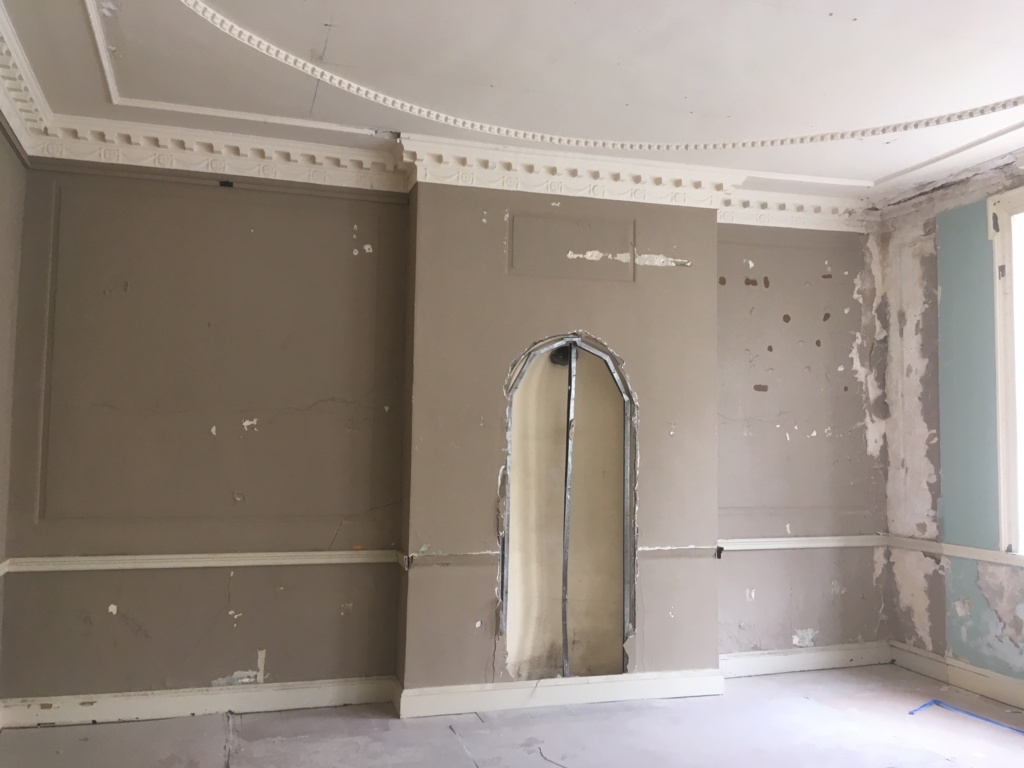
Architect Robert Carey Long, Sr. designed stove niches into Rembrandt Peale’s museum. They were plastered over later in the 20th century, but were still visible after the Peale’s 1930 renovations. In 2019, street artist Adam Stab did a live painting event as part of his solo exhibition at the Peale, creating a mural over one niche in the third floor “Assembly Room” while Ronald Rucker played his “Electronic Art.”
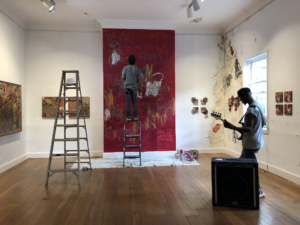
It was hard to say good-bye to Stab’s site specific work at the Peale, but as part of the current renovations, Peale’s original niches have been uncovered once more.
John Scarff, architect of the 1930 renovations, which saved the Peale from demolition, wrote of the niches:
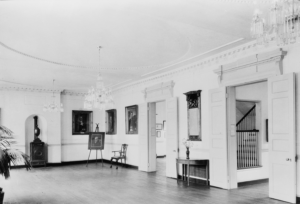
The six stove niches throughout the museum are original and Rembrandt Peale’s account book at the Maryland Historical Society shows that he bought more than one stove for the building. The entirely new radiator enclosures in these niches were suggested by the original stoves in the entrance hall of the Octagon House in Washington, D.C., built in 1800 for John Tayloe.
– Historic American Building Survey (HABS 398-MD) Report by Laurie Ossman, Ph.D., 2001.