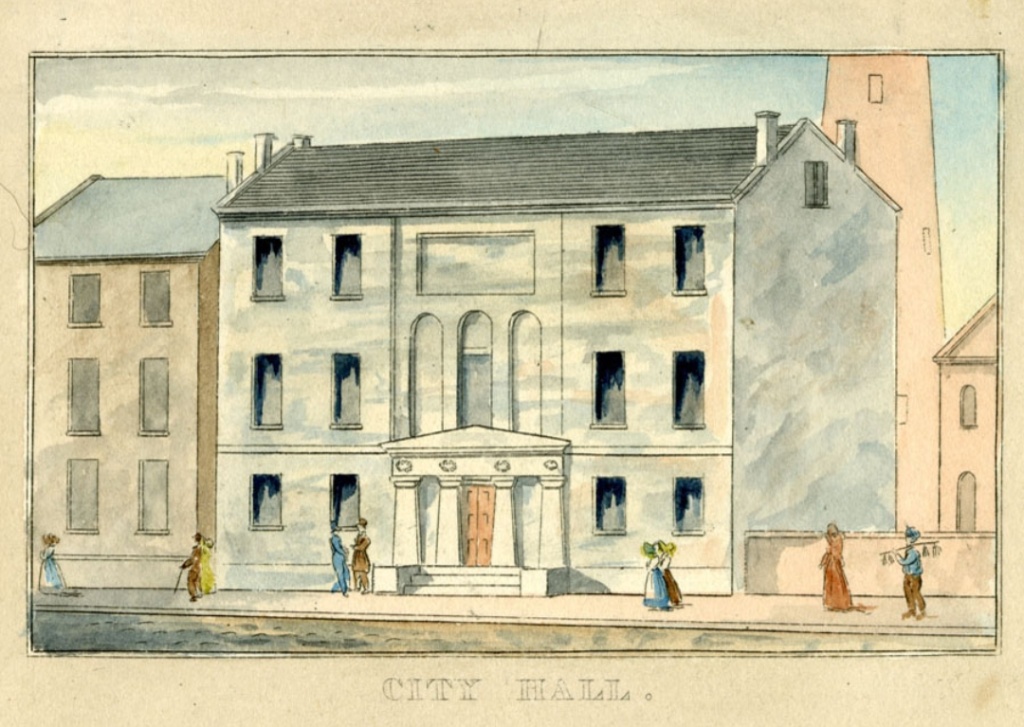
What happened to Rembrandt Peale’s Museum after it closed in 1829?
Shortly after Peale’s Museum closed in 1829, the City of Baltimore bought the building for use as the City Hall (1830-1875). The large gallery facing Holliday Street on the third floor, which Rembrandt Peale had used as a lecture hall, became the Assembly Room, where Baltimore’s City Council met, taking advantage of the room’s excellent acoustics and abundant natural light in an age before electricity. The room remains popular with artists and performers today, and is currently under renovation!
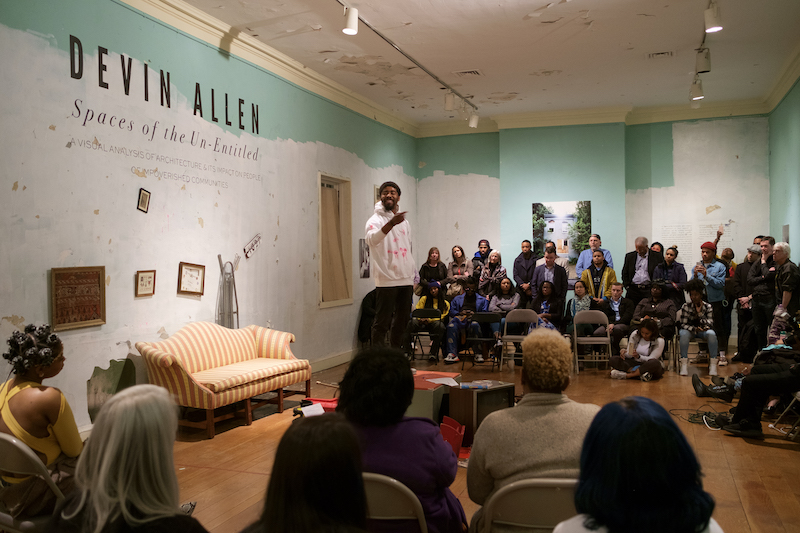
> Find out how you can support the Peale’s current reopening and renovations!
According to a recent Historic American Buildings survey, “the primary source of information regarding the extensive alterations to the building at this time is a series of construction bills, some signed and annotated by architect William F. Small, in the City Hall archives, Baltimore.” Those alterations include:
• West and south elevations stuccoed, in a method referred to as “granitework,” indicative of a faux ashlar treatment of scored joints to suggest blocks and gray finish color 11
• Central bay of frontispiece, entry level, recessed, and a three-bay Doric portico with seven wreaths on frieze were added. Blind rectangular panel above second level arcading appears “blank” in early images, indicating that signage for Peale’s Museum must have been affixed and removable, probably a wooden panel
• Granite steps and flanking plinths added; also two cast-iron boot-scrapers
• Roof receives wooden shingle treatment with copper flashing.
• Gutters installed; water table and belt course are cut into existing masonry
to receive down spouts
• Nine brick chimney caps installed
• Lightning rods installed
• Sash weights ordered, probably for installation on existing windows, as no orders for new sashes survive
• Shutters and hinges purchased and installed
• Four large granite stones ordered, for unspecified use, possibly as footings in main building
• Existing double entry doors receive glazed insert panels
• Partition wall installed on second floor, west gallery
• Many joists and framing lumber ordered, suggesting some extensive reframing, possibly a “leveling out” of the stepped floor of the third story lecture hall (west) and related adjustments to ceiling level on second story
• Large mahogany newel, corresponding to existing element on entry level, installed, indicative of some alterations to staircase at this time
• Vault doors ordered, location of vaults unknown
• “Patterae,” two chandelier hooks ordered, possibly as part of interior decorative upgrade that includes extensive list of furnishings and fabrics