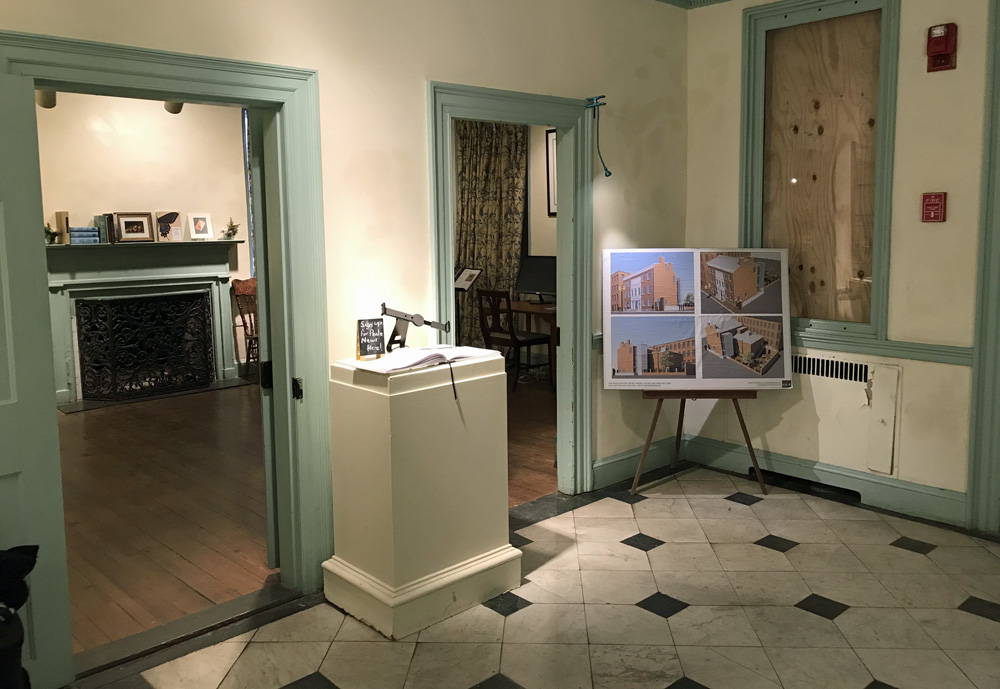
Q. Where did the floors in the current Peale building originate?
The Peale building was extensively renovated in 1930-31 by John Henry Scarff, a World War I Army veteran who later became an architect with the firm Wyatt and Nolting in Baltimore. In 1931, Scarff was “invited by the Mayor and City Council of Baltimore to supervise renovations at the Rembrandt Peale Museum . . .. He planned the reorganization of the museum, selected a director, and outlined new museum policies.”*
A 1991 historic structures report revealed that, “New flooring materials were installed throughout in the restoration of 1930-31. Marble floors in the Loggia, the Entrance Hall, first story Hyphen and hearths came from the original building of the Enoch Pratt Free Library on Mulberry Street. Pine floors for the Northwest, Southwest, and Southeast rooms of the first floor came from dwellings being demolished at the southwest corner of St. Paul and Saratoga Streets. The white oak flooring elsewhere, throughout the building, was new, a materials of excellent quality, mostly quarter-sawn in wide, random widths. Original flooring may remain beneath much of the wood flooring although none is visible except at the landings and floor level stairs, between the newels.”
> Learn more about our unique building history.
*With his military experience, Scarff was called to service again in World War II, this time as the Special Assistant to Huntington Cairns, the Secretary-Treasurer of the American Commission for the Protection and Salvage of Artistic and Historic Monuments in War Areas (the so-called “Monuments Men”). With this, Scarff began “creating policies regarding looted art, forced transfers, damaged monuments, and restitution procedures for displaced collections.” Source: Monuments Men Foundation for the Preservation of Art: Restitution, Education, Preservation, website, https://www.monumentsmenfoundation.org/scarff-john-h.