Rembrandt Peale: On the Eve of War

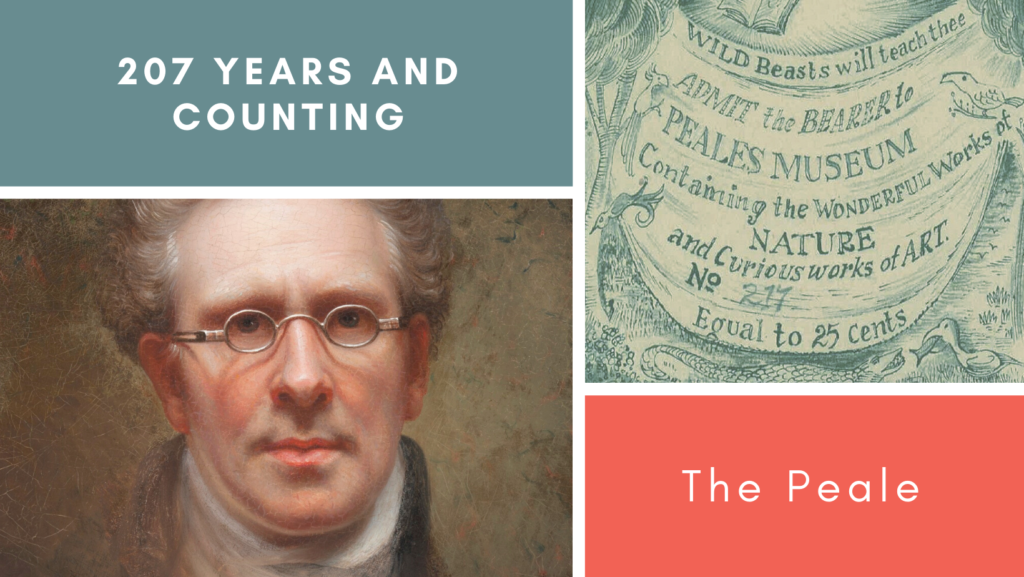
On the left, a portrait of American artist Rembrandt Peale who wears small spectacles, and on the right, a facsimile of an original ticket to the museum in 1815.

This summer, as the Peale Museum building approaches its 207th birthday, we’ll be featuring quotes, excerpts from letters, and advertisements that shed light on the Peale family and their Baltimore Museum. The museum was nearly derailed its opening week because the British were invading! On August 22, 2814, founder Rembrandt Peale wrote to his brother Rubens:

“It has not been in my power to write to you since the Alarm here. Every Citizen being commanded to bear Arms . . . The Intelligence at present is that the British are landing in the Patuxent & Potomack at considerable force, it is said 4000 at each place. Washington is supposed their object. Troops are pouring in from all Quarters 3 or 4000 marched from here yesterday.

As the time of trial had now come I endeavored to persuade myself to join in the general defences, but I found it impossible to shoot at a human being, [that] I never had borne arms & never could.

The Captain threatened to arrest me & truly I found that every delinquent was brought to the ranks under guard & that they refused to take Substitutes or fines. But jud[g]ing of the law for myself I stood my ground and charged the Captain not to Arrest me as one conscientiously scrupulous for that my example would do others no good and that he would lose the services of those who guarded me . . .. Wm. Bend has marched off to Washington, Mr. Coale & multitudes of my friends–So that with their absence & the grief of the Women my income is stopped, there having been only 4 persons in the Museum on Saturday morning & one in the afternoon.

I had begun the Portrait of Mrs. McKim but the alarm prevents her sitting as well as others. I have therefore leisure to go on with my improvements if I had money–but unfortunately I paid away all my money as fast as I received it . . .. Until the Alarm I was doing very well averaging about 15$ per day besides a few Tickets & was just about making an Arrangement with some friends by which I might be able to finish the dwelling part of the House–but all this must be suspended until the military rigour is relaxed–& the Citizens restored to their families.


Miller, Lillian B., ed. “The Selected Papers of Charles Willson Peale and His Family,” vol. 3, The Belfield Farm Years, 1810-1820. New Haven and London: Yale University Press, 1991, pgs. 258-9.
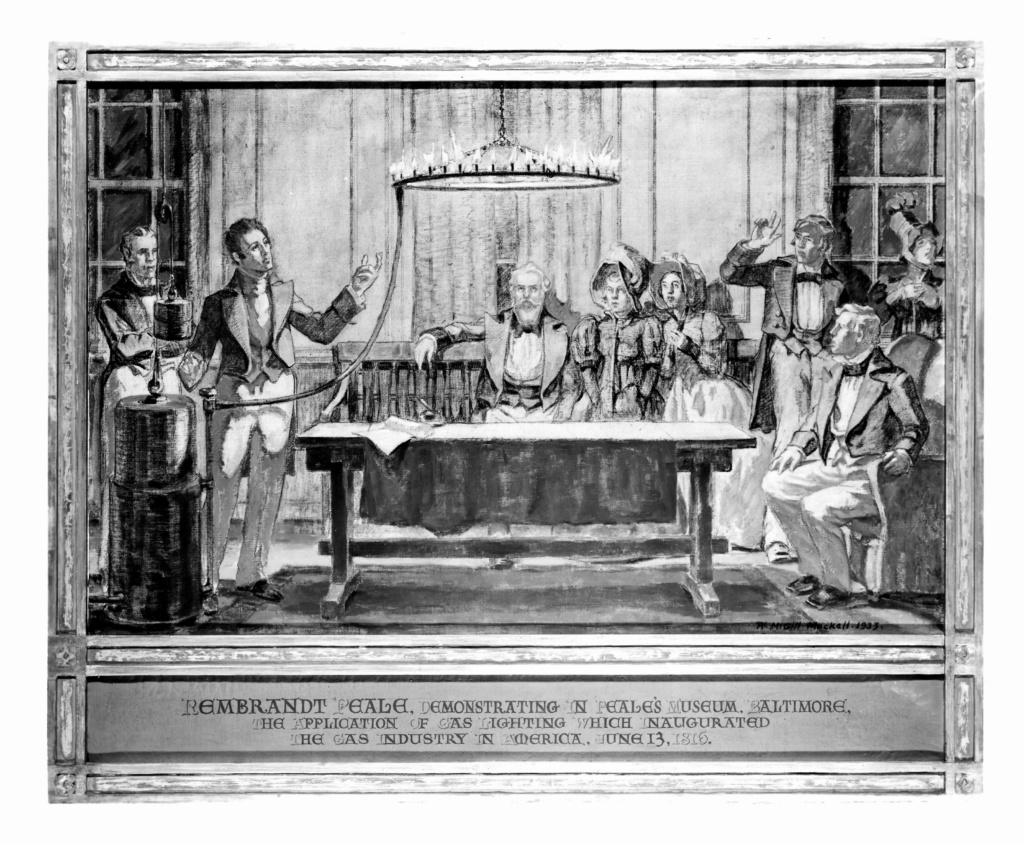
Peale Trivia: What did Rembrandt Peale demonstrate in the galleries?

Image courtesy of the Baltimore Museum of Industry Archives, BGE 36T

What did Rembrandt Peale demonstrate in the museum galleries?

Correct Answer: Peale demonstrated gas light! (Sure, he probably embalmed turkeys too, but we don’t have any documentation for that!)

> Find out how you can support innovation at the Peale!

In addition to being an artist, natural scientist, and museum director, Rembrandt Peale shared his family’s talent for innovation and entrepreneurship. He demonstrated gas light in his galleries, using the new energy technology of the day as an attraction to sell evening tickets to visit the museum.

It has been said that people would stand on Holliday Street in front of the Peale Museum marveling at the brightness of the light coming from its windows – an unprecedented sight in a world of candles and oil lamps. By 1817, Peale had started the Baltimore Gas Company and secured the contract to supply gas street lights throughout Baltimore – the first city in America, and among the first in the world, to be lit by gas – hence its nickname, “Light City.” Peale manufactured the gas in a shed at the back of the museum, and it was supplied to the city in wooden pipes made from hollowed out logs. Two hundred years later, the business Rembrandt Peale founded at his Museum is one of the oldest in the world: Baltimore Gas and Electric (BGE), an Exelon Company.

Peale Trivia: The Fate of the Peale Museum

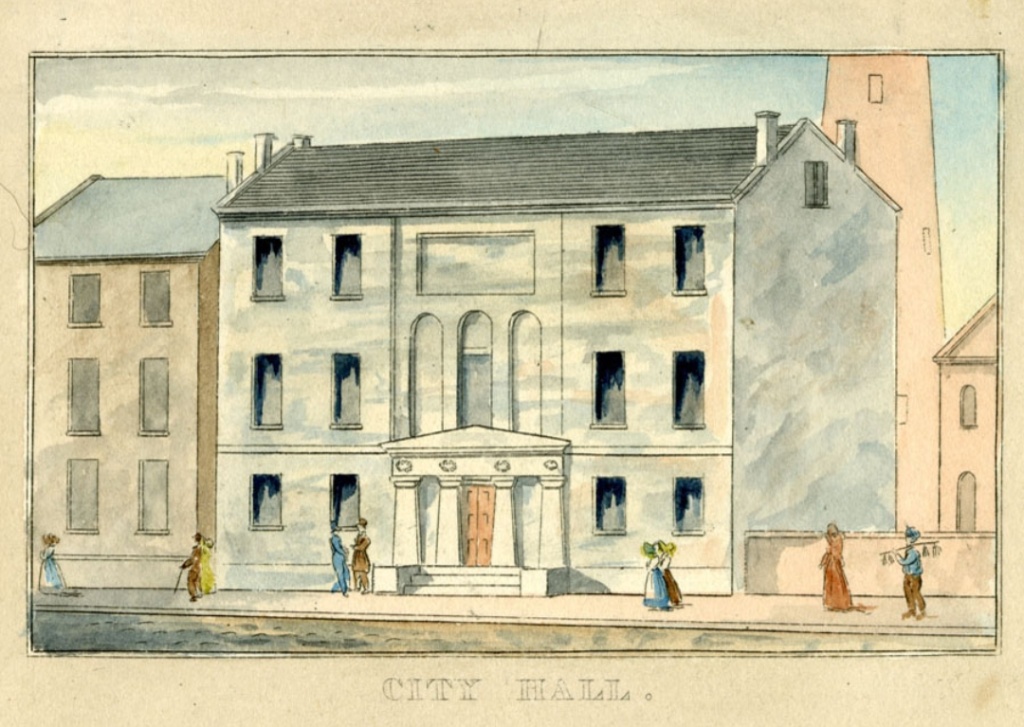
A watercolor of the Peale Museum as City Hall, painted in the 19th century

What happened to Rembrandt Peale’s Museum after it closed in 1829?

Shortly after Peale’s Museum closed in 1829, the City of Baltimore bought the building for use as the City Hall (1830-1875). The large gallery facing Holliday Street on the third floor, which Rembrandt Peale had used as a lecture hall, became the Assembly Room, where Baltimore’s City Council met, taking advantage of the room’s excellent acoustics and abundant natural light in an age before electricity. The room remains popular with artists and performers today, and is currently under renovation!

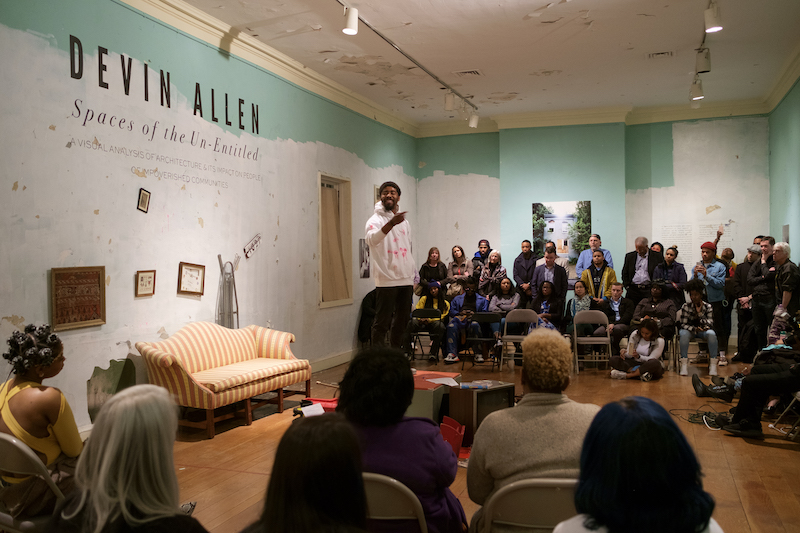
Devin Allen performs during his 2019 exhibition, Spaces of the Un-Entitled, in the gallery that served first as a lecture hall, then as the Assembly Room when the Peale Museum building became Baltimore’s first City Hall in 1830.


> Find out how you can support the Peale’s current reopening and renovations!

According to a recent Historic American Buildings survey, “the primary source of information regarding the extensive alterations to the building at this time is a series of construction bills, some signed and annotated by architect William F. Small, in the City Hall archives, Baltimore.” Those alterations include:

• West and south elevations stuccoed, in a method referred to as “granitework,” indicative of a faux ashlar treatment of scored joints to suggest blocks and gray finish color 11
• Central bay of frontispiece, entry level, recessed, and a three-bay Doric portico with seven wreaths on frieze were added. Blind rectangular panel above second level arcading appears “blank” in early images, indicating that signage for Peale’s Museum must have been affixed and removable, probably a wooden panel
• Granite steps and flanking plinths added; also two cast-iron boot-scrapers
• Roof receives wooden shingle treatment with copper flashing.
• Gutters installed; water table and belt course are cut into existing masonry
to receive down spouts
• Nine brick chimney caps installed
• Lightning rods installed
• Sash weights ordered, probably for installation on existing windows, as no orders for new sashes survive
• Shutters and hinges purchased and installed
• Four large granite stones ordered, for unspecified use, possibly as footings in main building
• Existing double entry doors receive glazed insert panels
• Partition wall installed on second floor, west gallery
• Many joists and framing lumber ordered, suggesting some extensive reframing, possibly a “leveling out” of the stepped floor of the third story lecture hall (west) and related adjustments to ceiling level on second story
• Large mahogany newel, corresponding to existing element on entry level, installed, indicative of some alterations to staircase at this time
• Vault doors ordered, location of vaults unknown
• “Patterae,” two chandelier hooks ordered, possibly as part of interior decorative upgrade that includes extensive list of furnishings and fabrics

Take a quick survey about programming at the Peale

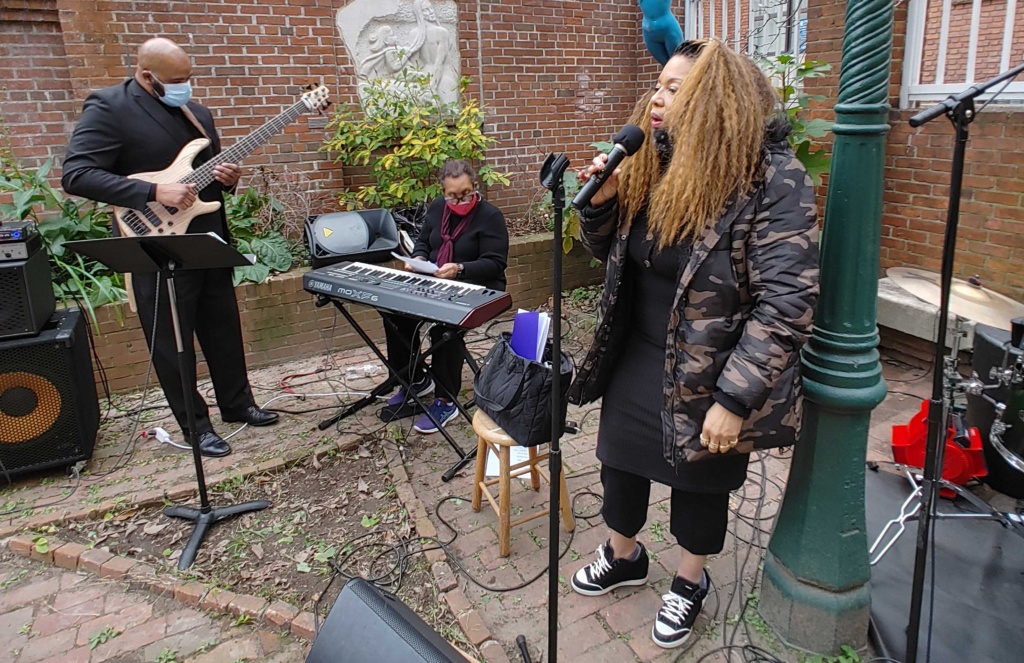
A group of three musicians perform a concert in the bricked garden of the Peale.

A great deal has changed since March 2020! As such, we wanted to know what you are thinking when it comes to your preferences for online and virtual programs.

When are YOU most available to attend online programs and what types of virtual events are YOU most interested in? Please take a moment to complete a 3-question survey! We thank you in advance.

> Please take this 3-question survey!

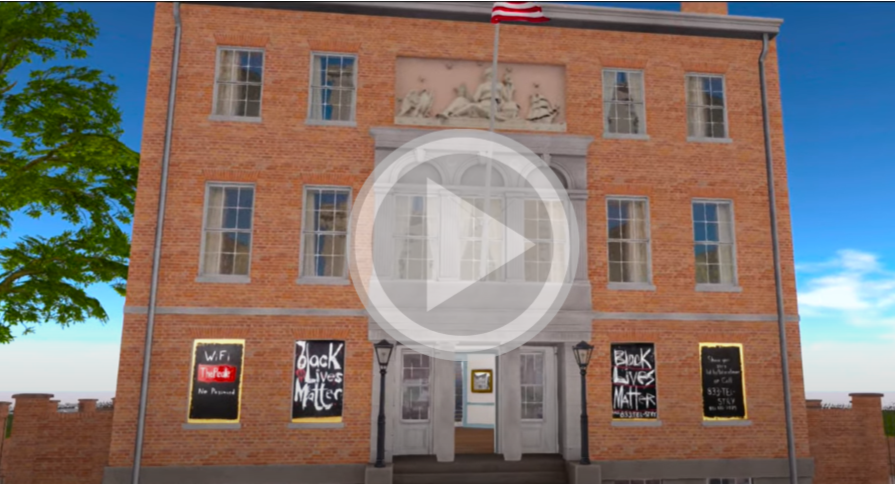
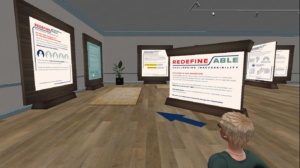
Visit the Virtual Peale ANYTIME in Second Life

Video about the Peale in Second Life by NovataSecondLife.

NOW OPEN! Visit the Virtual Peale Anytime!

The newest incarnation of the historic Peale Museum building opens on its 206th birthday as a full 3-D virtual space in Second Life, hosting exhibitions, events, programs, and casual visits!

You can now check out the building anytime!

New to Second Life?

  1. Install the Second Life viewer to participate in the tour in Second Life.
  2. Set up your free account from the Virtual Ability website and get logged in! (Picking an avatar is the fun part!)
  3. Learn some essential skills for moving around and interacting with the environment on the New Resident Orientation Course.

If you are joining us in Second Life, Peale Museum Island will be open to visitors starting at 11:00am ET at this link.

If you need assistance setting up your Second Life account or Avatar, please contact our friends at Virtual Ability here.


Now listening. We’re gathering stories about this historic moment.

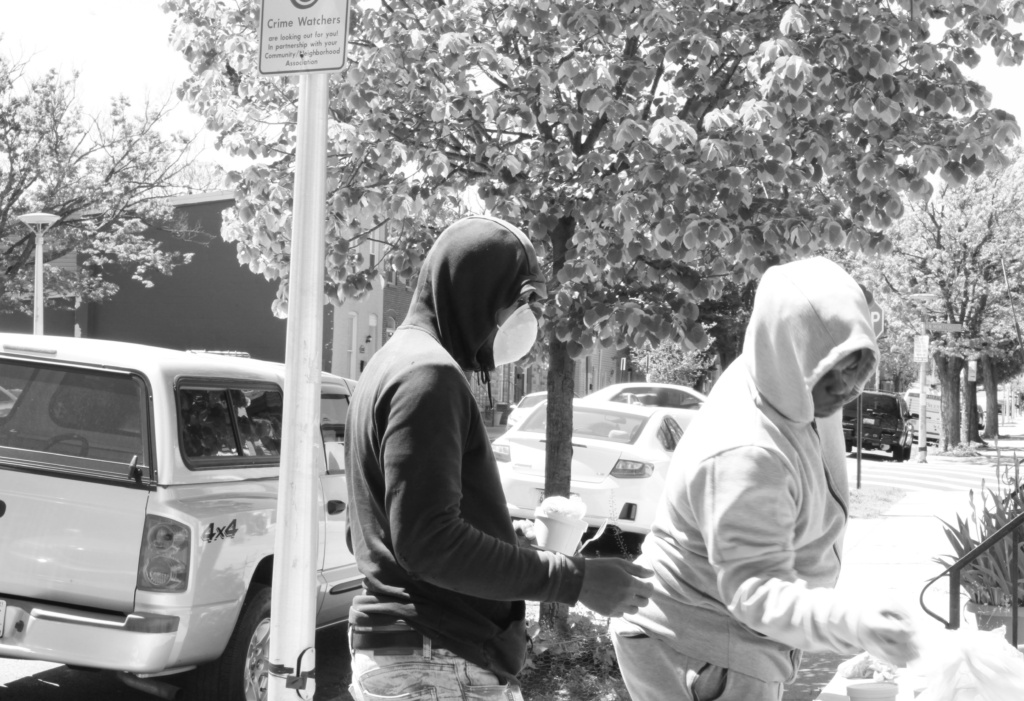
Two people wearing face masks and sweatshirts stop to pick up food.
East Baltimore residents pick up takeout lunches. Photo by Daisy Brown

In a nutshell, 2020 has been momentous. From the pandemic to the protests, this year has been so historic, so unprecedented that it can be difficult to make sense of everything that’s happening in real time. Have you stopped to really assess how you are feeling?

How are the people in your life or in your neighborhood coping with isolation, economic uncertainty, social unrest, etc.?

It’s our mission to listen.

The Peale remains committed to outreach, even as we work remotely, away from the museum building at 225 Holliday Street.

We want to hear from you. The Peale invites YOU to share your experience⁠—at this moment in time⁠—with us and with the rest of Baltimore. Tell us what are you doing to cope, how you’ve been affected, and what your outlook is for the future. Your story will be included in our story archive for future historians and may be included in an online or onsite exhibition. In addition, we publish most stories on the Peale’s SoundCloud Channel, Be Here Stories.

It’s easy to share a story. There are three ways you can record your thoughts. Choose the one that’s easiest for you:

*Please note that you DO NOT have to be professional storyteller, public speaker, or historian to participate. We welcome everyone’s stories, and we want to help make sure the whole story of Baltimore is told. Check out a sample story from a previous project.

WBAL Reporters Tour “Renovations” Exhibition

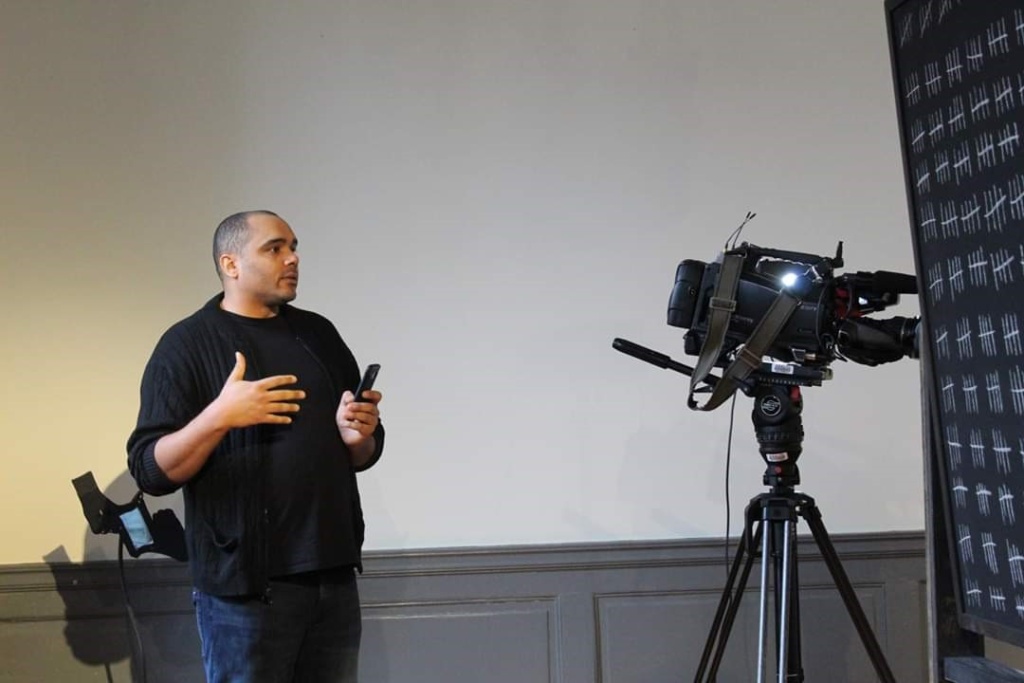
Renovations artist Christopher Kojzar, who is standing in front of a camera.
Artist Christopher Kojzar talks to reporters about the “Renovations” exhibition.

Last week, Lisa Robinson of WBAL TV stopped by the Carroll Mansion (our temporary home during our building renovations) to chat about another kind of renovation–the Renovations exhibition, currently on display at 800 E. Lombard Street.

The show, on view through March 1, 2020, is an exploration of African American education through the lens of contemporary art and has been lauded by visitors, arts organizations, and historians. Not only does the rarely explored topic resonate with locals but the exhibition makes innovative use of modern technologies to tell its stories–from augmented- and virtual reality to creative video presentations.

Conceived of by Christopher Kojzar, Mollye Bendell, and Jeffrey Gangwisch of the strikeWare Collective. The artists weave together traditional and new media to present a visual experience about the institutions, educators and progenitors who shaped how Baltimore’s Black community acquired formal training and knowledge. The entire project was inspired by the Peale building’s history as “Male & Female Colored School No. 1” in the 19th century.

Check out the interview! 

Holiday Shopping Made Easy! Out of the Blocks Cards

You don’t need a radio show or podcast to have meaningful conversations. Get to know strangers, neighbors, and even friends and family better with your very own deck of questions asked by Aaron Henkin for Out of the Blocks on WYPR. This standard deck of playing cards is an interview toolkit, tried and tested in hundreds of interviews across Baltimore and beyond. Available online here or at the Peale Center for US$10.00 each + shipping!

Learn more about Interviewing Neighbors and Strangers in this video with Aaron Henkin and find more resources for storytellers here.

BIG NEWS! Green Grant from BGE

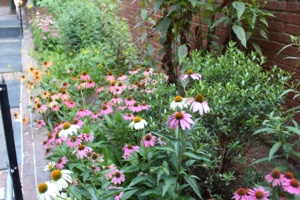
Extra! Extra! We’re thrilled to announce that the Peale has received a Green Grant from BGE to add gardens and greenery to Watchhouse Alley, the areas between the Peale and its neighbors on Holliday Street. The additional green spaces will not only help nature by encouraging pollinators to visit but will also help beautify the community! We’re super grateful to BGE for this opportunity! Read more about the BGE Grant.

The project will create:

  • An engaging space, connecting to the streets beyond. The Peale Center is improving and extending an existing garden by bringing in new plants and trees. It will also add seating to the area. Between a coffee shop planned for the museum and the nearby Ida B’s Table, a highly praised restaurant, Proctor expects the alley to be a destination itself, as well as a gateway to the museum and other neighborhood businesses.
  • An invitation to birds and butterflies. A group of artists first revived the long-neglected garden as part of a 2017 exhibition about the effects of light pollution on birds, supported by a BGE Green Grant. Today, the goal is to extend the pollinator plantings to attract beautiful flying creatures to the neighborhood.
  • A place for stories and exploration. The garden area will be the perfect place to tell stories about Baltimore culture and natural history; about where birds go when they migrate and how we can help bees and butterflies; and about the vibrant community that is Baltimore today. It also will be a place for hands-on learning and workshops.
  • A place for experimentation. Initially, many of the plants and trees will remain in pots. Staff and volunteers will be able to move them around to determine the best permanent locations. They also will monitor which creatures – human and otherwise – visit and enjoy the plantings.
  • A safer place. Vintage-style gates to be locked during the museum’s off-hours will help prevent the accumulation of garbage and vandalism and protect against fires.