Renovation Update: Ceiling Joists

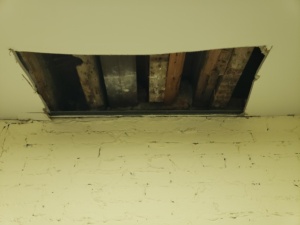
A hole cut in the ceiling in one of the rooms at the Peale.

Peale Renovation Update!

This week we opened a small hole in the ceiling of one of the Peale’s rooms to check on the load-bearing capacity of the adjacent wall. The wall divides the 1814 ground floor room (reportedly where the live animals were kept when Rubens Peale ran the museum), and which was originally the same size as the Picture Gallery above. The renovation plans call for opening the wall up again to create space for a café. In the meanwhile, we get a special glimpse at some original 1814 timber in the fabric of the building! Stay tuned to get weekly updates about our progress and other special insights into the country’s first purpose-built museum.

Renovation Update: Taking Out the Trash

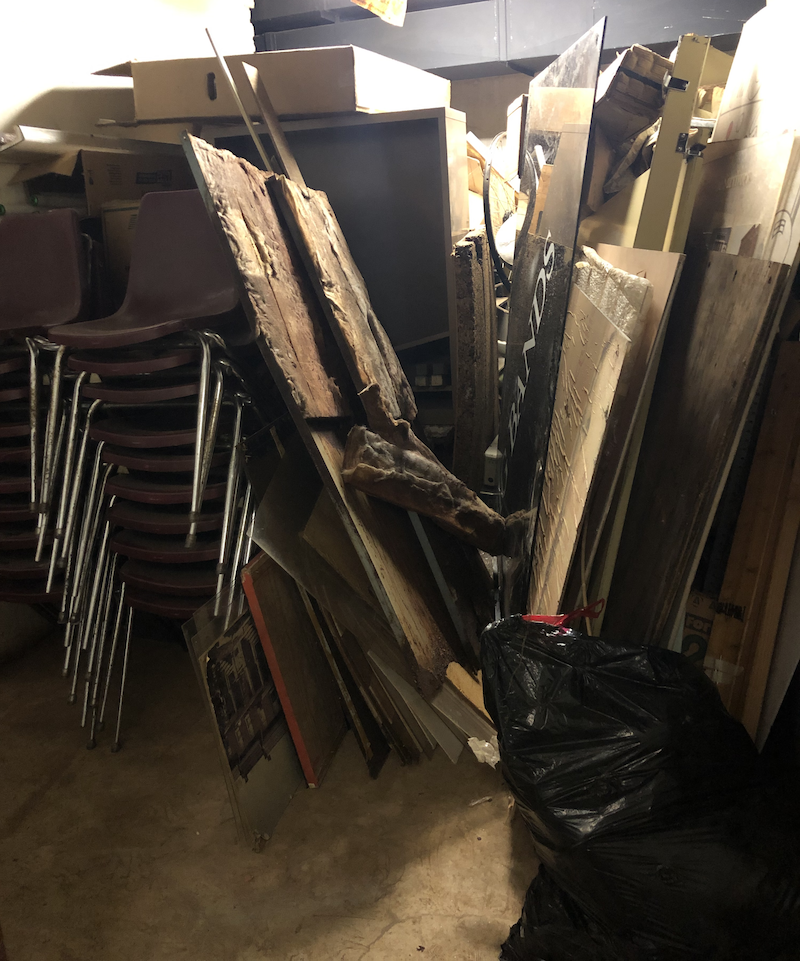
A heap of trash includes lots of cardboard boxes found in the basement of the Peale!

Help us take out the trash!

This summer an intrepid team from BGE cleaned out the basement of their company’s birthplace – the Peale Museum. We now need to haul the broken chairs, dented metal cabinets, and other detritus from the Museum’s 20th century life away for recycling and safe disposal. A generous board member has offered up to $1,500 in matching funds for the costs of removal. Can you make a donation or offer in-kind help for this essential renovation clean-up? Email us if YOU can help!

We’ve Moved While the Peale is Being Renovated

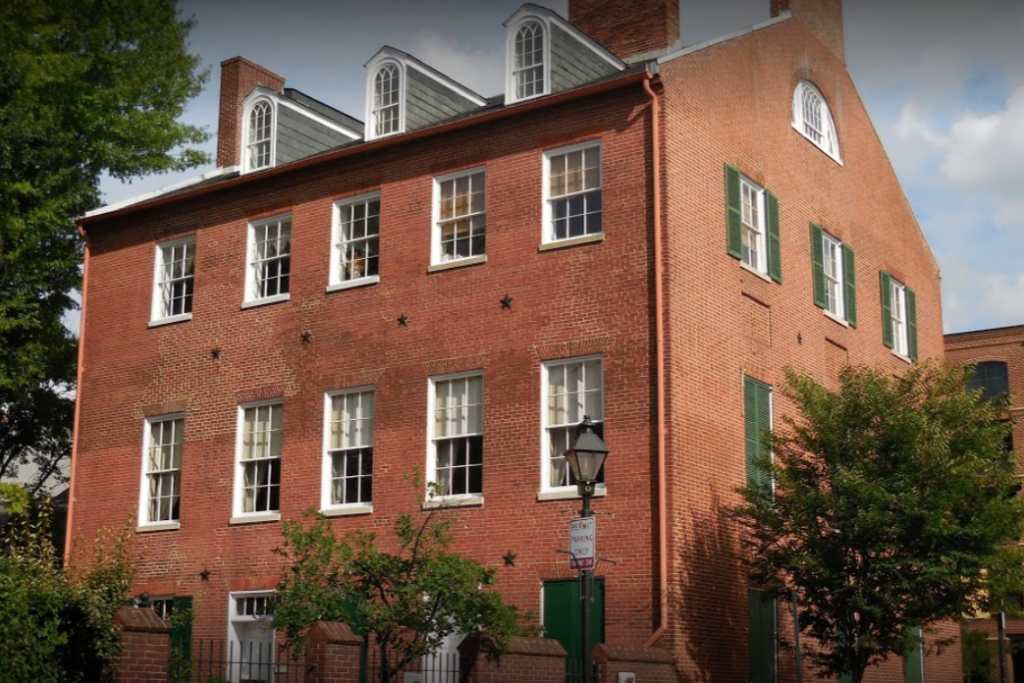
The red brick Carroll Mansion, located in Baltimore.

Say HELLO to the Carroll Mansion!

In 2020, during our renovation, the Peale will take up residence at the Carroll Mansion, which has also seen many varied and interesting lives!

According the Carroll Mansion’s website: “The first house structure was built on the current Carroll Mansion site between 1804 and 1808. Subsequent owners made additions to the original structure, the most extensive of which being made by Christopher Deshon, who owned the house from 1811 to 1818. Deshon sold the mansion to Richard Caton, son-in-law of Charles Carroll of Carrollton. Richard and his wife Mary moved into the mansion in 1820.”

Located in downtown Baltimore at 800 E. Lombard Street, on the edge of the Inner Harbor and Little Italy, the Carroll Mansion is another federal style building which will generously host the Peale’s programs and offices. The Mansion is open for tours Saturdays and Sundays from 12-4pm as well as for special events. There is free parking for visitors on S. Front St. beside the Mansion and parallel with President St. with a provided parking pass. The Carroll Mansion is also served by MTA Busses 7, 10 and 11, an the Shot Tower/Market Place Metro Stop.

During the Peale’s extensive renovations, the Carroll Mansion will not only host our staff but also our lively and innovative programs, from exhibitions to storytelling workshops. Please check the Peale’s What’s On? page regularly for new programs.

Composer Scott Patterson Comes to the Peale on August 8

Scott Patterson's back faces the viewer as he plays the piano.

“Scott Patterson may turn out to be one of the most important composers of the 21st century,” predicts Peale Center director Nancy Proctor after seeing Scott play last year. “As an audience member, I can say that his original compositions, which blend an incredible range of genres and instruments, from the Peale’s 19th-century piano to 21st-century beat boxing, are moving in a way I’ve never heard before.”

Last fall, the Peale was fortunate to host the premier of Scott’s operatic ballet, the Cease & Desist Ballet, created by Afro House Baltimore, an organization that’s “committed to the development of a music culture that is disruptive, exuberant, innovative, emergent, and transformative.” Proctor says she’s been a fan ever since seeing the ballet at the Peale Center.

She’s not the only one who’s taken note of Patterson’s performances. The Pittsburgh Tribune-Review describes Patterson’s playing as, “a masterly blend of virtuosity, singing style and beautiful voicing.” His blend of classical, soul and rock music is futuristic, emotive and luxuriant. Early this year, Scott received the $40,000 Mary Sawyers Imboden Prize, the largest artist award given in the region.

Scott has toured with Camille A. Brown & Dancers andat numerous venues, including the Lincoln Center, Belfast Festival at Queen’s, White Bird, The Joyce Theater, and Debartolo Performing Arts Center. He is contributing composer of the Bessie Award winning Mr. TOL E. RAncE and Brown’s critically acclaimed work, BLACK GIRL: Linguistic Play.
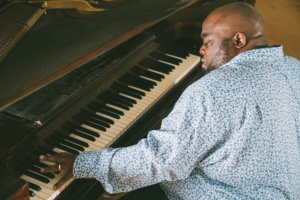
Scott Patterson plays a vintage piano.

Here in Baltimore, Scott has taken on a new challenge: composing new pieces for the Peale’s 1879 Knabe Square Grand Piano – a very different sounding instrument from a modern piano. He’ll perform in the Peale’s historic Picture Gallery on August 8, and the performance will be recorded by Peale residents, ArtsLaureate, for publication. The Peale gratefully accepted the piano from the Baltimore Museum of Industry because it dates to the period when the Peale was Male and Female Colored School No. 1, and Baltimore’s music scene first took flight: the decade when musical instrument manufacturers accounted for over 1% of the city’s GDP (there were three piano manufacturers in Baltimore in that period), and Ford’s Opera House hosted no fewer than 24 different opera companies! (See Jackson Gilman-Forlini in Maryland Historical Magazine, Spring/Summer 2017). This was the dynamic music scene into which Baltimore legends like Eubie Blake were born.

Symbolically, Scott’s concert brings together the birth of Baltimore’s modern music scene with the origins of public school education for people of color in the city and is an opportunity to think about the connections and legacy of both these historic moments for contemporary life in Baltimore.

The staging at the Peale will be unusual, offering an immersive environment to experience the music rather than usual concert seating. Audience members are welcome to bring cushions to lounge on during the performance, a modern-day version of the “groundlings” experience at the original Globe Theater!

An Elegant Rendezvous with Scott Patterson
August 8, starting with a champagne toast with Scott at 7pm, doors for general admission at 7:30pm, and the concert at 8pm.
Get your tickets through Artful.ly or Mixolo.
Volunteers Wanted!

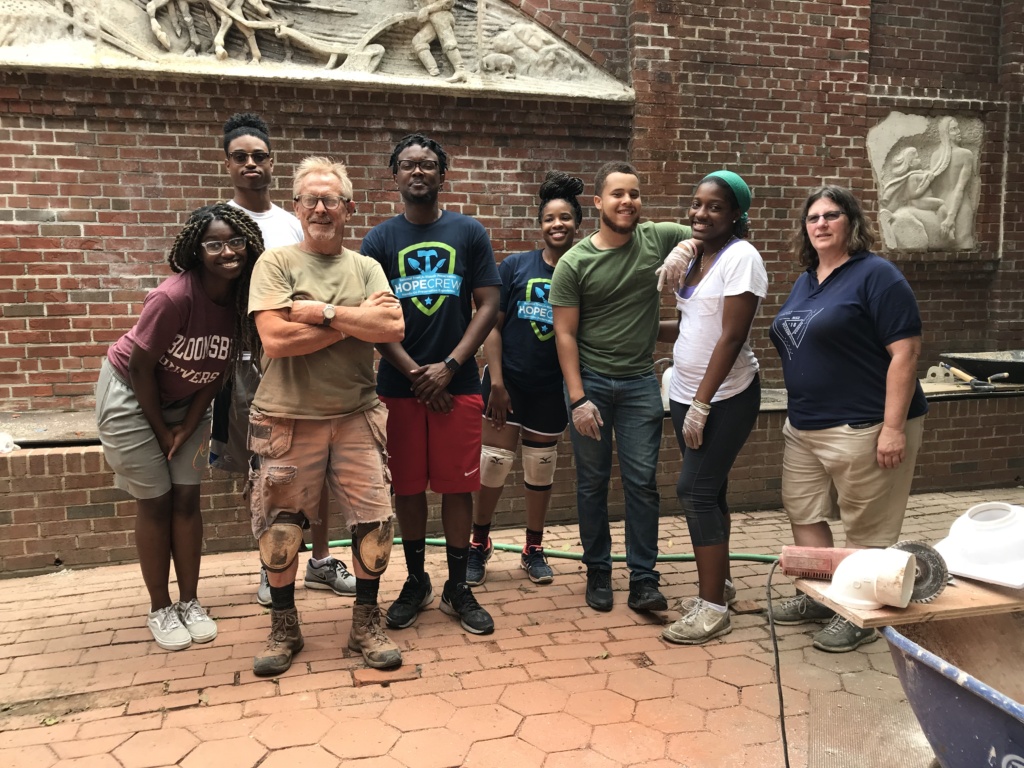
A group of eight young adults and a team leader pose for a photo by the brick wall in the Peale's garden.

It’s time for spring cleaning at the Peale! If you have a little extra time and don’t mind getting your hands dirty, we could use your help!

  1. Garden maintenance volunteers: We need volunteers to weed and water the garden throughout the summer. Enjoy the peace and quiet of the garden and some passing butterflies while you work!
  2. Spring cleaning: We need people to help us with a spring cleaning in the house and to help organize our storage area!

If you can help, please email us info@old.thepealecenter.org. THANK YOU!

Call for Entries- No Walls, No Bans, No Border

CALL FOR ENTRIES: Exhibition applications are due March 31! Submit here: https://www.rebellensbmore.org/entries

The exhibition will be held May 9-June 2, 2019.

“No Walls, No Bans, No Borders” is a benefit photography and art exhibit featuring the work of Baltimore-based activists connecting ideas of the violence of capitalism, colonialism, and the racist/fascist state both locally here in Baltimore and globally. A portion of artist’s sales will go back to the groups doing the work on the ground.

This is a call to activists for their photo and video documentation of movements they are a part of, along with art made made in response to those issues and movements. Submit your entries online at: https://www.rebellensbmore.org/entries. Artists may submit up to three available artworks for inclusion in the exhibition.

The theme focuses on the work being done to dismantle walls/bans/borders of oppression, whether through physical state walls, walls of a prison, walls of stigma, or institutional walls. The goal is to tell the story through the eyes of those on the ground doing the work.

The event is being curated by Rebel Lens Bmore – a group of on-the-ground activists using photo and video to document social movements in Baltimore – in collaboration with a number of other great artists in Baltimore.

For more information about Rebel Lens, or to submit works for the Benefit Exhibition, please visit rebellensbmore.org.

Questions? Contact us at rebellensbmore@gmail.com.

Catch the last two episodes of the Institute of Visionary History

Find out why one person called these unique immersive theater performances “visually and emotionally vivid!”

Here’s the back story! Discovered in the basement beneath The Peale Center, the Archives of the Deep Now are the records of a centuries-old secret society calling themselves The Institute of Visionary History. The Institute believed the building to be a kind of “thin place” where one can more easily transcend our present reality and contact other planes, places, and times. Their experiments combined scientific inquiry and visionary sight to uncover histories heretofore untold.


EPISODE SIX: “A HORSE BY THE TAIL IN THE NIGHT. RUNS NOVEMBER 10, 17. TIMED TICKETS

Two obscure aristocrats are fated to dine together indefinitely over the course of an evening that will not cease. Cursed with abundance, they chew away the hours, their food and drink complemented with the bitter fruits of their recollections; spiced with regret and desire, mellowed with well-worn stories. Any attempt to exhaust the inexhaustible is doomed to fail. But like a finely cured meat there is pleasure to be had in consuming the decay and even more in sharing it with whom you may. (Yes, Episode Six comes before Episode five!). Each experience runs 45-60 minutes for a group of up to five people.

EPISODE FIVE: “SHE WHO SEES AND HEARS THE CRIES OF THE WORLD” RUNS NOVEMBER 29-DECEMBER 2. TIMED TICKETS

This experiment was originally conducted in 1836, but was so disastrous the results were suppressed for almost 200 years…until an anonymous informant gave us new information in an effort to answer the question: “How can one escape a curse?” (Actualized by Elizabeth Ung.)

Please note: The Institute is recommended for ages 12 and above. You will be required to ascend and descend at least two staircases at a relaxed pace. Plan to arrive a full ten minutes before your scheduled start time and to spend about an hour (or more if you choose) at The Peale. Beverages and light snacks will be available (donations appreciated). Restrooms will be accessible before and after the experience. Coat racks and safe storage for bags will also be available. Each experience runs 45-60 minutes for a group of up to five people.

“Pealed Every Which Way” Projects

On view earlier this spring, the Pealed Every Which Way exhibition was created by by Goucher College students and featured site-specific individual works, sounds, performances and stories that responded to the Peale Museum building and history.

Not only did students have an opportunity to create installations, they also produced digital publications and stories. Check them out!

An illustration showing the interior of what the Peale Museum may have looked like in the 19th century, juxtaposed with a drawing of Charles Willson Peale, lifting a curtain to reveal his museum.
An illustration from “Flip Me,” a Goucher College student project.

Scary Story
By Tia Resham Cheema, Katie Chen, Marissa Grant, Dina Diani
An interactive website and digital ghost story!


Camera Obscura
By Will Kirby
A comprehensive photobook showing Camera Obscura techniques as employed at the Peale


Flip Me
By Alexis Liszewski
A beautifully drawn custom flip book, featuring the Peale and its patrons


Peale Center Project
By Maddy Romberger
A combination of drawings and photographs, covering the Peale’s long history and impressive architecture


(Peale)ing Pictures
By Camryn Agostino
Coming Soon!


Story of the Floor
By Melina Albornoz
Coming Soon!


Perspectives
By Vela Culbert
Coming Soon!

Restoration of a 19th Century Gas Pole and Fire Alarm Box at the Peale

Thanks to the continual help and support of Baltimore Gas and Electric, the restoration of a nineteenth-century gas pole and fire alarm box is complete! The pole was lifted out of the back garden of the Peale Center for Baltimore History and Architecture by volunteer BGE engineers and was taken to be restored by David Conrad of Baltimore Foundry Works on an early Saturday morning in March. The pole was initially installed on the South East corner of Monument Street, and Park Ave (see photograph provided by Kevin Larmore) in 1906. When the City’s call box system was shut down in the middle of the twentieth century, it was installed in the historic Peale Museum’s garden. Now you may be asking, what exactly is a fire alarm box, and why is it significant?

Baltimore first installed its call box system in 1859-1860 and was the first line of defense when it came to fires within the City. Each call box had wiring running to the central office, which was located on the second floor of the Peale Museum building, by then being used as City Hall, from 1859 up until 1896. When the fire alarm box was pulled, the central office would get the signal and would relay it to the appropriate fire station. When the firemen arrived at the scene, they would signal back to the central office by pulling the alarm box several more times, utilizing Morse code to communicate if they needed more men or equipment. In this way, the Peale served as the nerve center for the city’s fire alarm system.

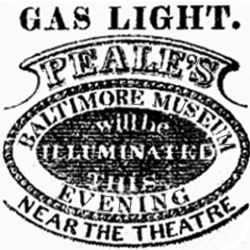
The Peale Museum’s founder, Rembrandt Peale, had introduced another new technology, gas lighting, to his galleries two generations before. In order to attract visitors at night and sell more tickets to his Museum and Gallery of Fine Arts, in 1816 Peale began illuminating his galleries with gas light chandeliers on specially-advertised evenings. By 1817, Rembrandt Peale and his partners had founded the Gas Light Company of Baltimore, which is today Baltimore Gas and Electric, and secured the contract to supply gas streetlights throughout the City of Baltimore. Through his efforts, Baltimore was the first city in the United States, and one of the first in the world, to be illuminated by gas lighting. Gas lights lined the streets of Baltimore up until the late 1950s when they almost entirely removed. Through the restoration of this pole and fire box, it will serve as an excellent artifact to showcase this aspect of Baltimore’s innovative history.

See the renovation process below!

[envira-gallery id=”2737″]