Take a Web Survey!

We Need Your Help to Redesign Our Website

Please take a quick survey to participate in our focus group.

Just as our physical building is being renovated, so is our digital presence. As we shoot for the reopening of the building in 2022, we’ll also be launching our a new website next year, redesigned to help our users find what they need and explore the Peale’s rich history.

> Take the Survey on Google.

BIG NEWS! Green Grant from BGE

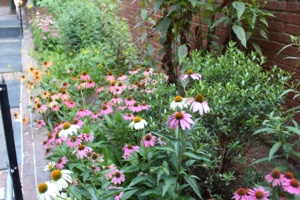
Extra! Extra! We’re thrilled to announce that the Peale has received a Green Grant from BGE to add gardens and greenery to Watchhouse Alley, the areas between the Peale and its neighbors on Holliday Street. The additional green spaces will not only help nature by encouraging pollinators to visit but will also help beautify the community! We’re super grateful to BGE for this opportunity! Read more about the BGE Grant.

The project will create:

  • An engaging space, connecting to the streets beyond. The Peale Center is improving and extending an existing garden by bringing in new plants and trees. It will also add seating to the area. Between a coffee shop planned for the museum and the nearby Ida B’s Table, a highly praised restaurant, Proctor expects the alley to be a destination itself, as well as a gateway to the museum and other neighborhood businesses.
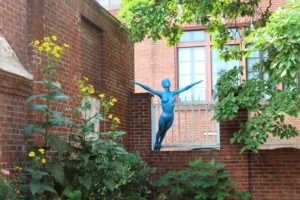
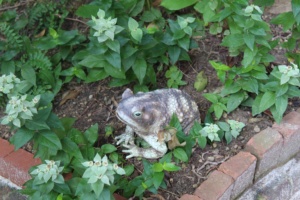
  • An invitation to birds and butterflies. A group of artists first revived the long-neglected garden as part of a 2017 exhibition about the effects of light pollution on birds, supported by a BGE Green Grant. Today, the goal is to extend the pollinator plantings to attract beautiful flying creatures to the neighborhood.
  • A place for stories and exploration. The garden area will be the perfect place to tell stories about Baltimore culture and natural history; about where birds go when they migrate and how we can help bees and butterflies; and about the vibrant community that is Baltimore today. It also will be a place for hands-on learning and workshops.
  • A place for experimentation. Initially, many of the plants and trees will remain in pots. Staff and volunteers will be able to move them around to determine the best permanent locations. They also will monitor which creatures – human and otherwise – visit and enjoy the plantings.
  • A safer place. Vintage-style gates to be locked during the museum’s off-hours will help prevent the accumulation of garbage and vandalism and protect against fires.

We’ve Moved While the Peale is Being Renovated

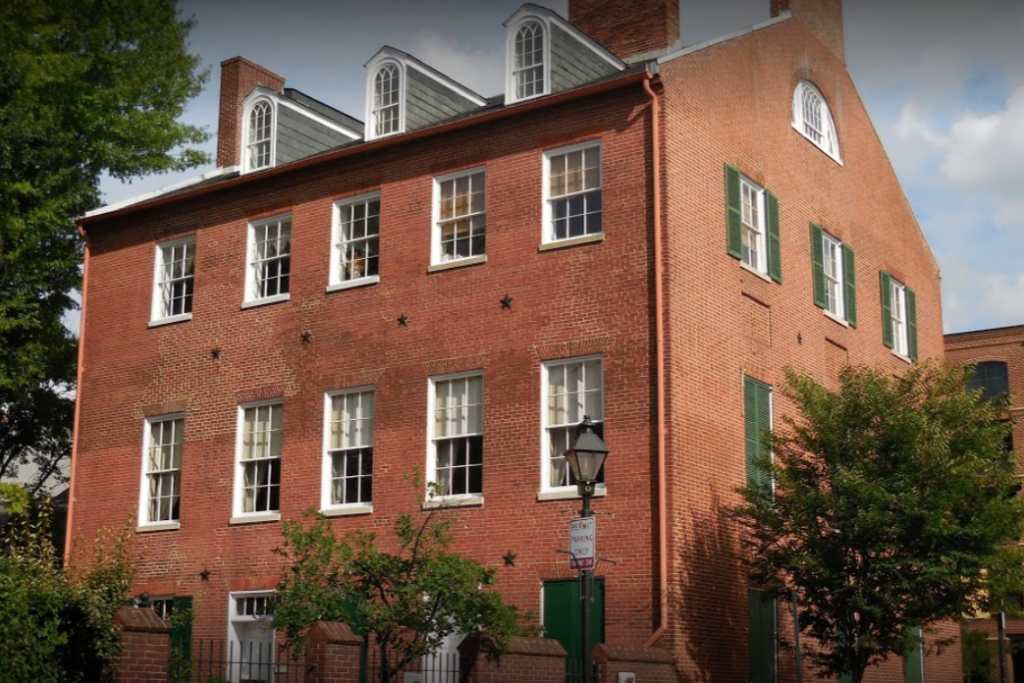
The red brick Carroll Mansion, located in Baltimore.

Say HELLO to the Carroll Mansion!

In 2020, during our renovation, the Peale will take up residence at the Carroll Mansion, which has also seen many varied and interesting lives!

According the Carroll Mansion’s website: “The first house structure was built on the current Carroll Mansion site between 1804 and 1808. Subsequent owners made additions to the original structure, the most extensive of which being made by Christopher Deshon, who owned the house from 1811 to 1818. Deshon sold the mansion to Richard Caton, son-in-law of Charles Carroll of Carrollton. Richard and his wife Mary moved into the mansion in 1820.”

Located in downtown Baltimore at 800 E. Lombard Street, on the edge of the Inner Harbor and Little Italy, the Carroll Mansion is another federal style building which will generously host the Peale’s programs and offices. The Mansion is open for tours Saturdays and Sundays from 12-4pm as well as for special events. There is free parking for visitors on S. Front St. beside the Mansion and parallel with President St. with a provided parking pass. The Carroll Mansion is also served by MTA Busses 7, 10 and 11, an the Shot Tower/Market Place Metro Stop.

During the Peale’s extensive renovations, the Carroll Mansion will not only host our staff but also our lively and innovative programs, from exhibitions to storytelling workshops. Please check the Peale’s What’s On? page regularly for new programs.

Call for Entries- No Walls, No Bans, No Border

CALL FOR ENTRIES: Exhibition applications are due March 31! Submit here: https://www.rebellensbmore.org/entries

The exhibition will be held May 9-June 2, 2019.

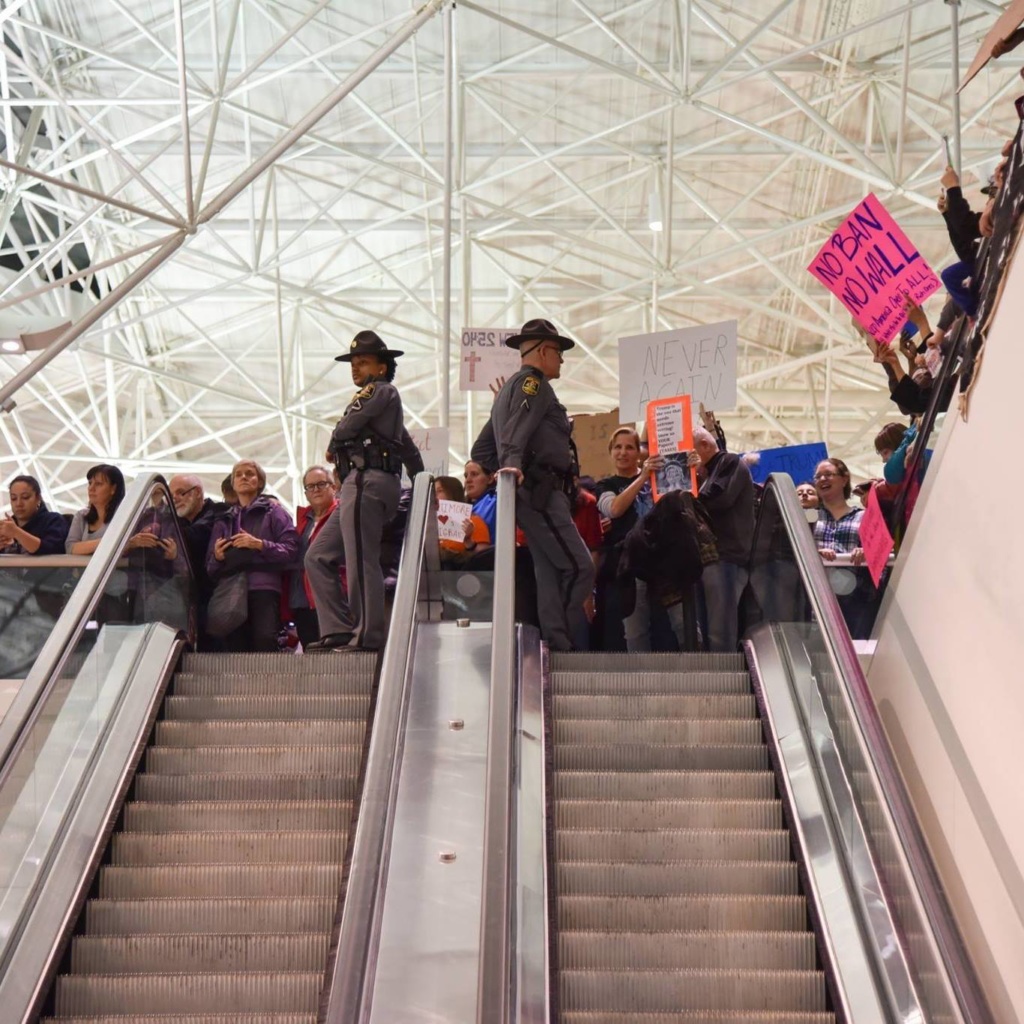
“No Walls, No Bans, No Borders” is a benefit photography and art exhibit featuring the work of Baltimore-based activists connecting ideas of the violence of capitalism, colonialism, and the racist/fascist state both locally here in Baltimore and globally. A portion of artist’s sales will go back to the groups doing the work on the ground.

This is a call to activists for their photo and video documentation of movements they are a part of, along with art made made in response to those issues and movements. Submit your entries online at: https://www.rebellensbmore.org/entries. Artists may submit up to three available artworks for inclusion in the exhibition.

The theme focuses on the work being done to dismantle walls/bans/borders of oppression, whether through physical state walls, walls of a prison, walls of stigma, or institutional walls. The goal is to tell the story through the eyes of those on the ground doing the work.

The event is being curated by Rebel Lens Bmore – a group of on-the-ground activists using photo and video to document social movements in Baltimore – in collaboration with a number of other great artists in Baltimore.

For more information about Rebel Lens, or to submit works for the Benefit Exhibition, please visit rebellensbmore.org.

Questions? Contact us at rebellensbmore@gmail.com.

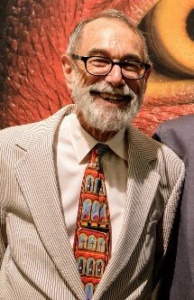
Celebrating Jim Dilts, President of the Board of the Peale Center

Jim Dilts at the opening of “Birdland and the Anthropocene” at the Peale Center, October 6, 2017.

It is with deep sadness that we must share the news that the Peale Center’s Board President, James D. Dilts, passed away unexpectedly on May 8, 2018. Jim was a true friend of Baltimore and a tireless champion for its history and architecture – above all, the historic Peale Museum building. He was also a master storyteller, a veteran of the Baltimore Sun, and author of numerous books on Baltimore architecture, including with John Dorsey, the definitive  A Guide to Baltimore Architecture; historic railroads, with his latest, The World the Trains Made: A Century of Great Railroad Architecture in the United States and Canada, due out in September; and jazz, which he brought to historic buildings across the city in a concert series, “Jazz in Cool Places.” Thanks to Jim’s vision and leadership, the Peale’s exterior is now restored and the building is open again as a center to experience Baltimore’s past and imagine its future through cultural storytelling and innovative exhibitions, programs and events. He helped us all “see Baltimore in a new light.” Penny Williamson, Jim’s wife, asks that donations be made to the Peale’s Capital Campaign in lieu of flowers.

Checks can be made payable to:
The Peale Center for Baltimore History and Architecture, P.O. Box 1742, Baltimore, MD 21203.

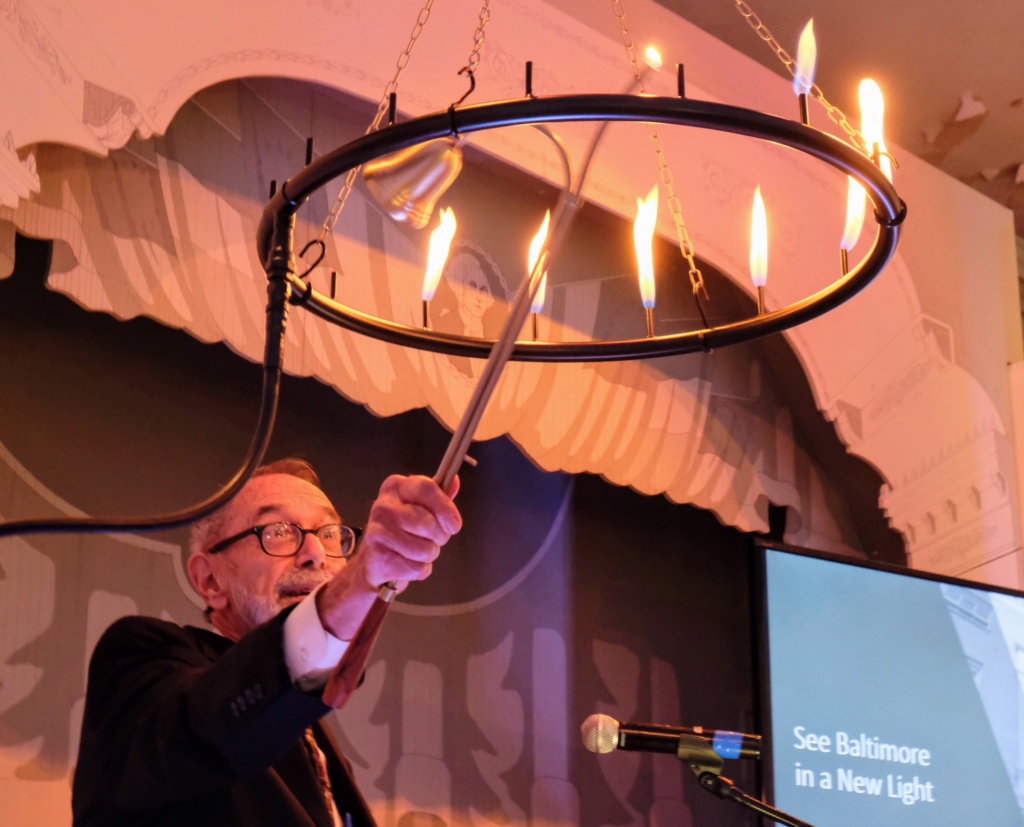
Jim Dilts lighting the Peale’s “Magic Ring of Fire,” November 29, 2017.

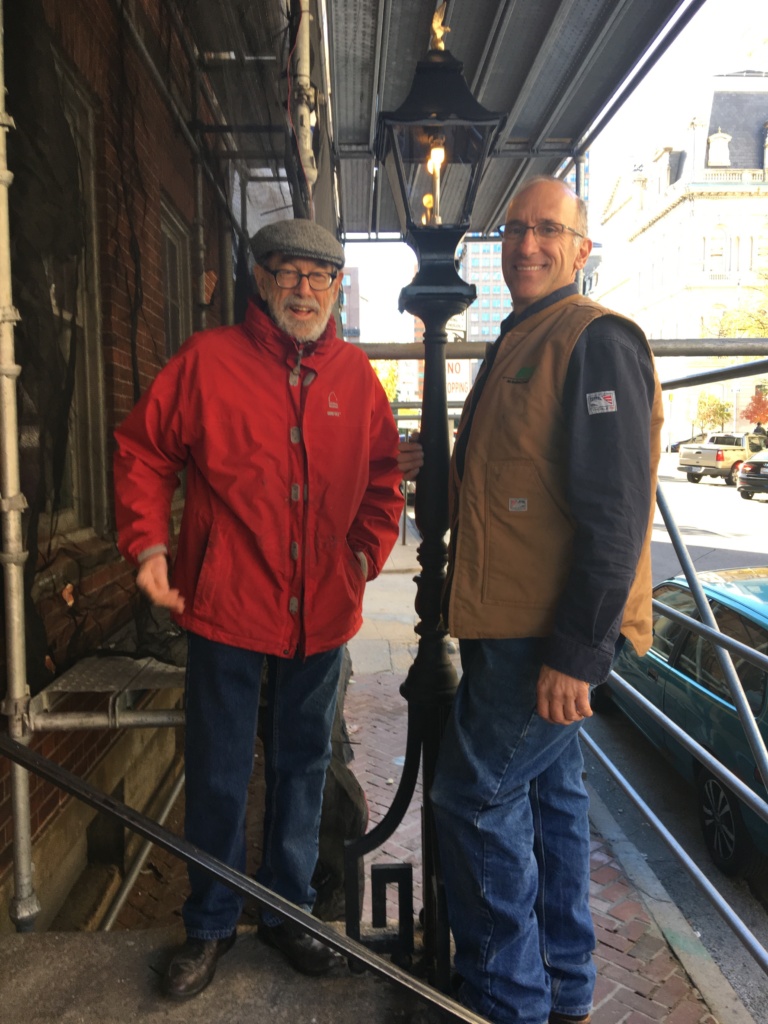
Jim Dilts and BGE engineer, Steve Pedri, with the historic gas streetlights restored by BGE, in front of the Peale, November, 2017.

Restoration of a 19th Century Gas Pole and Fire Alarm Box at the Peale

Thanks to the continual help and support of Baltimore Gas and Electric, the restoration of a nineteenth-century gas pole and fire alarm box is complete! The pole was lifted out of the back garden of the Peale Center for Baltimore History and Architecture by volunteer BGE engineers and was taken to be restored by David Conrad of Baltimore Foundry Works on an early Saturday morning in March. The pole was initially installed on the South East corner of Monument Street, and Park Ave (see photograph provided by Kevin Larmore) in 1906. When the City’s call box system was shut down in the middle of the twentieth century, it was installed in the historic Peale Museum’s garden. Now you may be asking, what exactly is a fire alarm box, and why is it significant?

Baltimore first installed its call box system in 1859-1860 and was the first line of defense when it came to fires within the City. Each call box had wiring running to the central office, which was located on the second floor of the Peale Museum building, by then being used as City Hall, from 1859 up until 1896. When the fire alarm box was pulled, the central office would get the signal and would relay it to the appropriate fire station. When the firemen arrived at the scene, they would signal back to the central office by pulling the alarm box several more times, utilizing Morse code to communicate if they needed more men or equipment. In this way, the Peale served as the nerve center for the city’s fire alarm system.

The Peale Museum’s founder, Rembrandt Peale, had introduced another new technology, gas lighting, to his galleries two generations before. In order to attract visitors at night and sell more tickets to his Museum and Gallery of Fine Arts, in 1816 Peale began illuminating his galleries with gas light chandeliers on specially-advertised evenings. By 1817, Rembrandt Peale and his partners had founded the Gas Light Company of Baltimore, which is today Baltimore Gas and Electric, and secured the contract to supply gas streetlights throughout the City of Baltimore. Through his efforts, Baltimore was the first city in the United States, and one of the first in the world, to be illuminated by gas lighting. Gas lights lined the streets of Baltimore up until the late 1950s when they almost entirely removed. Through the restoration of this pole and fire box, it will serve as an excellent artifact to showcase this aspect of Baltimore’s innovative history.

See the renovation process below!

[envira-gallery id=”2737″]

The Peale is recruiting!

Interested in helping reinvent the 21st century museum? The Peale Center for Baltimore History and Architecture is looking for reliable and creative volunteers who want to spread their wings and help us soar! We’re renovating the oldest museum building in the U.S. and relaunching it as a platform for cultural innovation: a center for producing inclusive narratives of the City that help people see Baltimore in a new light.

Whether your thing is art or architecture, storytelling or natural science, history or new technologies, there is an opportunity for you to develop your ideas and skills at the Peale. Even an occasional contribution can make a big difference to the Peale and the services we are able to provide to the City’s communities. Everyone’s input is welcome and valued – contact us if you can help with your time and expertise. Thank you!

Peale Center’s New Roof Nears Completion

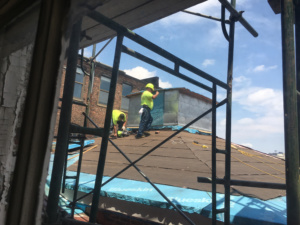
The Peale Center’s new roof is almost finished. This is the first step in restoring America’s oldest museum building, a National Historic Landmark. Plans call for the building to reopen in 2020 as a center for Baltimore history and architecture.

The work is being done by Ruff Roofers, a firm that has put new roofs on other iconic structures in the city, including the base of the Washington Monument, the Old Otterbein Church, Stanford White’s Lovely Lane Church (Spanish tile), and the copper dome that crowns the cupola of Gilman Hall, centerpiece of the Johns Hopkins University’s Homewood campus.

The Peale Center’s new roof is a standing seam metal roof, “basically a copper roof with a tin-zinc coating,” according to Tim Caldwell, general manager of Ruff Roofers, who is supervising the work. The old roof on the building, installed in the early 20th century, was also a standing seam metal roof made of galvanized steel coated with lead. The material was known as terne, and required painting, he said. The old roof had been repaired in 1970, when major renovations were made to the building, but leaks had developed since then, causing damage to the interior walls and decorative plasterwork.

When they tore off the old metal roof, Caldwell said, they found underneath wooden skip sheathing. This was made up of random width boards, some with a bark texture, that were mostly 18-22 inches wide, indicating that had been cut from the center of the tree. This material was left in place, covered with half-inch plywood, and the new metal roof installed over it. Caldwell said the new roof will have a 50-100-year lifespan.

An important element of the project was re-constructing the lantern and skylight that top the rear hip roof of the building. (The main portion of the building facing the street has a pitched roof.) The lantern structure was removed with a crane, taken to the shop, refaced with the same material as the roof, re-glazed, and then put back on the building, again with a crane. The skylight lights the second-floor space that was once Rembrandt Peale’s art gallery and will become a presentation and exhibit hall in the new center.

For a building, the roof is the main line of defense against the elements, according to Caldwell. “It’s amazing how quickly water can do damage; it will rot wood, freeze and expand in masonry,” he said. “The roof is one of the first things you need to do to protect a building.”

Rebuilding and capping the chimneys, re-pointing the exterior brick and restoring the masonry, including the sandstone sills, is also ongoing as part of the same contract. Academy Stone is the contractor for the masonry restoration; this work is expected to be finished in about six weeks. The total cost of the first phase of the Peale restoration is about $700,000, including roughly $500,000 for the new roof. It is being paid for by the City of Baltimore, which owns the building. SM&P Architects is the designer and the Baltimore Department of General Services is overseeing the project.

[envira-gallery id=”1848″]
Peale Center Appoints Nancy Proctor, PhD, Executive Director

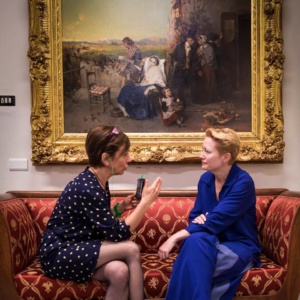
Nancy Proctor (right) prepares for a presentation in Italy in 2017.
Nancy Proctor (right) prepares to give a talk in Italy in 2017.

(Baltimore, MD) — August 2, 2017 — The Peale Center for Baltimore History and Architecture is pleased to announce the appointment of its first executive director, Nancy Proctor, PhD. Most recently, Nancy served as Deputy Director of Digital Experience and Communications at the Baltimore Museum of Art, and before that as head of Mobile Strategy and Initiatives at the Smithsonian Institution. She is co-chair of Museums and the Web (MW), the largest international conferences dedicated to innovation in the cultural sector, and she lectures and publishes widely on technology, accessibility, and transformation in museums.

“We are delighted to have Nancy Proctor as our new director,” said James D. Dilts, President of the Peale Center. “With a background in American art history, she combines traditional museum experience and a broad knowledge of the latest techniques of communication. We are very fortunate to have her expertise and exciting new ideas as we work to bring the Peale Museum into the 21st century.”

The Peale Center, a 501(c)3 non-profit corporation, is restoring and reopening to the public Baltimore’s Peale Museum, with the help of the City of Baltimore, the State of Maryland, and private foundations and donors. Closed and largely vacant since 1997, the Peale is the oldest museum building in America and a National Historic Landmark. Rembrandt Peale opened it in 1814 as an art and natural history museum. The city-owned building has also served as our earliest City Hall, the first public high school for African American students in Baltimore, and the city’s municipal museum, commonly known as “the Peale.”

The Peale Center for Baltimore History and Architecture aims to help people see Baltimore in a new light by serving as a production house for new narratives of the city. Nancy has developed the Peale’s core program, Be Here: Baltimore, as a platform for Baltimore’s diverse communities to share their authentic stories of the city and its places, and to enable them to be heard globally and locally. This digital cultural storytelling concept transforms the way oral history is produced and made relevant in the 21st century using contemporary tools and technology.

When the Peale’s renovation is complete in 2020, the historic building will host a Media Maker Space, enabling access for the city’s culture keepers to the resources and expertise they need to publish anything from mobile apps and virtual reality (VR) experiences, to exhibitions and documentary films. By supporting the city’s creators, the Peale aims to catalyze a new American Cultural Renaissance and help produce a more inclusive record of the city. The Peale will also be the go-to place for learning about Baltimore’s history and architecture, and the people who created the city we know today.

Plans call for the building to be completely restored and reopened to the public in 2020. Exhibitions and performances continue in the building while construction takes place outside: currently the roof is being replaced and exterior masonry restored by the City of Baltimore. The Peale will host a Founder’s Day Open House August 14-15 featuring drop-in tours and live storytelling with WYPR’s Aaron Henkin and neighbors from the 200 block of Holliday Street. Baker prize-winning artist, Lynne Parks, curates Birdland and the Anthropocene, at the Peale October 6-29, exploring the impact of the city’s architecture and the built environment on natural ecosystems. Following in November, Submersive Theater’s ground-breaking H.T. Darling’s Incredible Musaeum Presents: The Treasures of New Galapagos, Astonishing Aquisitions from the Perisphere, which appeared at The Peale Center this Spring, will return for a limited run.

Nancy Proctor speaking at TEDx Hamburg, 25 June 2017.

The Peale Center for Baltimore History and Architecture is generously supported by many individuals and organizations, including the State of Maryland, the Middendorf Foundation, the Macht Foundation, the Abell Foundation, the Riepe Family Foundation, the Baltimore City Historical Society, the Delaplaine Foundation, the City of Baltimore’s Department of General Services, Maryland Heritage Areas Authority, the Michael J. & Patricia K. Batza Foundation, Baltimore Gas and Electric, Baltimore National Heritage Area, and the William G. Baker, Jr. Memorial Fund, creator of the Baker Artist Portfolios, www.BakerArtist.org.

Roof Renovation Update

The cupola over the Peale’s picture gallery.

Baltimore City’s Department of General Services is in the final stages of replacing the Peale’s roof and restoring the exterior masonry. Renovation has now begun on the cupola that gives natural light to the “picture gallery.” It was the addition of this gallery to the Federal-style row house that made Rembrandt Peale’s 1814 museum an architectural innovation by Robert Cary Long, Sr.

The replacement of the Peale’s roof and restoration of its exterior is being undertaken by Baltimore City’s Department of General Services.

Completion of the renovation work is planned by end of Summer 2017. The Peale is open for special events and available for rental throughout the renovation of the building’s exteriors. Contact us if you have questions or would like to visit!