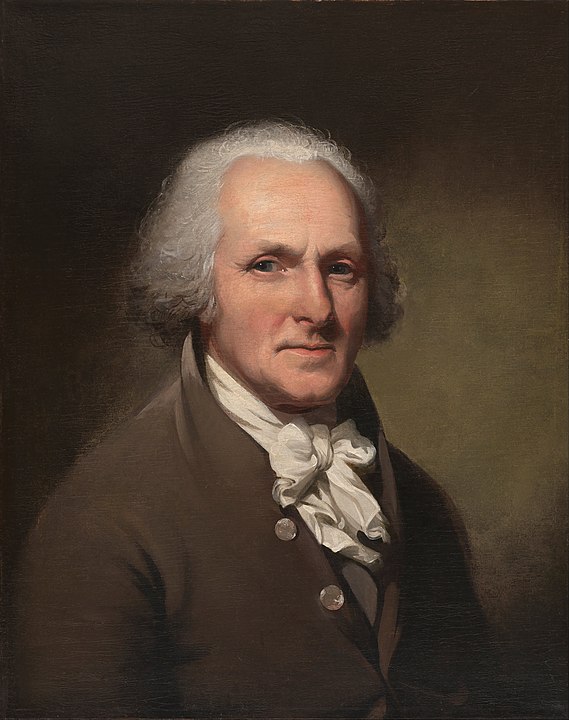
This summer, as the Peale Museum building approaches its 207th birthday, we’re featuring quotes, excerpts from letters, advertisements, and Peale trivia that shed light on Rembrandt Peale and his original museum. Check out an excerpt from a letter sent by Charles Willson Peale to his son Rembrandt. The missive is dated October 1814, roughly one month after the Battle of Baltimore, defending the city from the British in the War of 1812.
Belfield Octr.16.1814
Dear Rembrandt,
Dear Rembrandt,
“After a storm comes a calm,” you have weathered a hard storm of apprehension of danger, and the Citizens of Baltimore have done themselves immortal honor by their exertions to defend the City against the stuped British. I call them stupid because it is the height of stupidity for them to wage war against the Americans, whose friendship they ought in good policy to cultivate. so much for politiks [sic]*. I hope you now doing your best at Portraits, and, making pleasing pictures is the only way to obtain full imployment [sic], and it is the most profitable labour you can put your hands too. . . .
It is natural enough for the british to make high demands when they had determined to send a large Army against America, and it would be easy for them to lower their demands afterwards, What have they done? Burned washington [sic]. What did it cost them in men & expence? More than they chuse [sic] to acknowledge. No doubt the burning of Washington will make them exult and perhaps London will be illuminated on the occassion [sic].
But what will they think when they know how they were foiled at Baltemore [sic] . . . Their foolish proclamation of burning all our assaillable [sic] towns & other conduct, such as plundering Citizens, will do them much injury, by uniting America & joining them heartily in a vigorous defense. . . . it is my real belief that we shall shortly have peace, however contrary to the present appearance. . . . Rubens will be going presently therefore I must end my epistle. Give our love to the family, write to me when you find leisure.
Yrs. CWPeale
*What does [sic] mean? When used in brackets, the notation means that the preceding word appears exactly as written in the original, even if seems odd or is misspelled.
