In Memory of Romaine Somerville

A woman with gray hair, round glasses, and a purple top stands in front of an orange-colored background.

Remembering Peale Board Member Romaine Somerville

“Helping to restore the Peale Museum left neglected for years by Baltimore City was just the ticket for Romaine Somerville. Diminutive in stature, but filled to the brim with enthusiasm, good nature, and interest in preserving Baltimore’s historic buildings and neighborhoods, she joined the Peale Board and served as its secretary. At the time, the Peale Board was small and met in private homes to plan strategies to raise the millions of dollars necessary to repair and reopen the failing building. Romaine arrived at meetings impeccably dressed and ready to get to work.  She had years of experience in the museum world and the contacts to match.  She was always willing to make phone calls and write letters to help the board achieve its goals.

Romaine often lingered after board meetings over a cup of tea and loved to talk about her grandchildren. She was proud of their accomplishments and glad they lived nearby in Washington, DC.  She was very skeptical when her daughter bought a place near the beach but came to love spending long relaxing weekends there with Frank and her family.

Romaine’s love of art and art history melded well with the history of the Peale Family and their contributions to the young America’s art world. Her beloved home in Bolton Hill and its adjoining neighbor was built of stone left over from the 1890 construction of Corpus Christi Catholic Church, located right across Lafayette Street. Her library of art history books and a grand piano shared the sun filled front room on the second floor of her house. She looked forward to her annual trip to the Winter Show in New York City where she met former colleagues, was surrounded by beautiful art and antiques and added to her library at home.

The Peale, a National Historic Landmark and America’s first purpose-built museum, is now restored to tell its story and share the stories of Baltimore’s citizens. Romaine Somerville appreciated its historic and architectural significance as well as its role in America’s art history and contributed to its successful preservation.”

—Sally Johnston, former Treasurer of the Peale

Photo of Romaine Somerville by Julia Ulstrup
Peale Trivia: The Fate of the Peale Museum

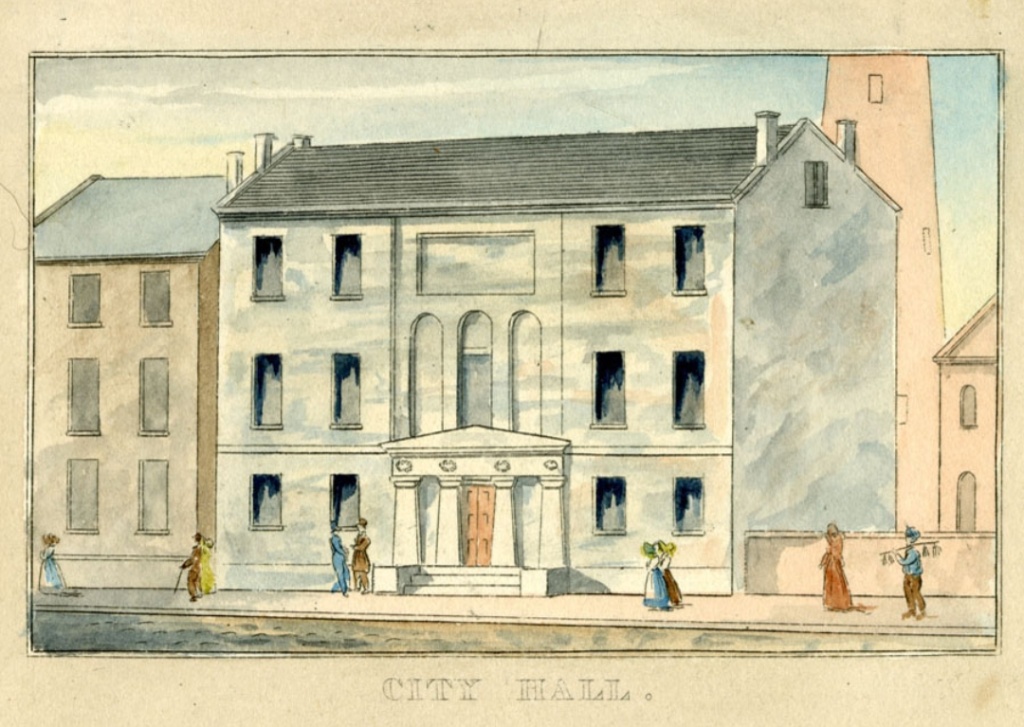
A watercolor of the Peale Museum as City Hall, painted in the 19th century

What happened to Rembrandt Peale’s Museum after it closed in 1829?

Shortly after Peale’s Museum closed in 1829, the City of Baltimore bought the building for use as the City Hall (1830-1875). The large gallery facing Holliday Street on the third floor, which Rembrandt Peale had used as a lecture hall, became the Assembly Room, where Baltimore’s City Council met, taking advantage of the room’s excellent acoustics and abundant natural light in an age before electricity. The room remains popular with artists and performers today, and is currently under renovation!

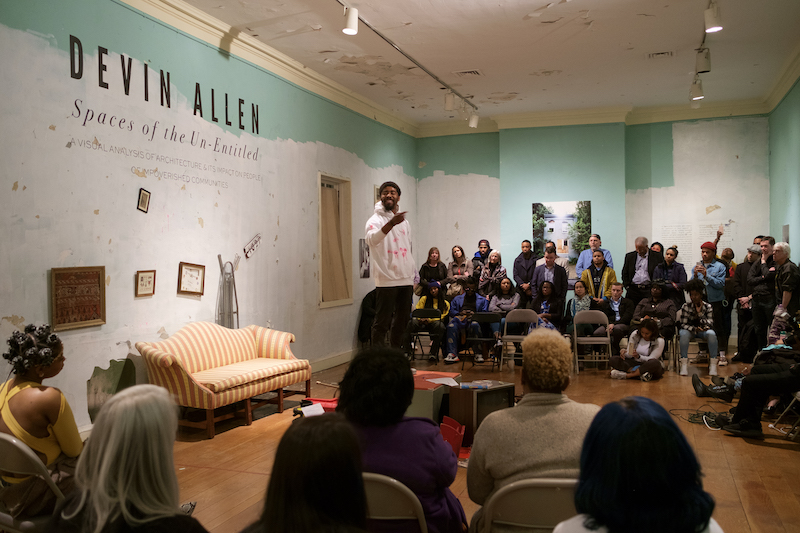
Devin Allen performs during his 2019 exhibition, Spaces of the Un-Entitled, in the gallery that served first as a lecture hall, then as the Assembly Room when the Peale Museum building became Baltimore’s first City Hall in 1830.


> Find out how you can support the Peale’s current reopening and renovations!

According to a recent Historic American Buildings survey, “the primary source of information regarding the extensive alterations to the building at this time is a series of construction bills, some signed and annotated by architect William F. Small, in the City Hall archives, Baltimore.” Those alterations include:

• West and south elevations stuccoed, in a method referred to as “granitework,” indicative of a faux ashlar treatment of scored joints to suggest blocks and gray finish color 11
• Central bay of frontispiece, entry level, recessed, and a three-bay Doric portico with seven wreaths on frieze were added. Blind rectangular panel above second level arcading appears “blank” in early images, indicating that signage for Peale’s Museum must have been affixed and removable, probably a wooden panel
• Granite steps and flanking plinths added; also two cast-iron boot-scrapers
• Roof receives wooden shingle treatment with copper flashing.
• Gutters installed; water table and belt course are cut into existing masonry
to receive down spouts
• Nine brick chimney caps installed
• Lightning rods installed
• Sash weights ordered, probably for installation on existing windows, as no orders for new sashes survive
• Shutters and hinges purchased and installed
• Four large granite stones ordered, for unspecified use, possibly as footings in main building
• Existing double entry doors receive glazed insert panels
• Partition wall installed on second floor, west gallery
• Many joists and framing lumber ordered, suggesting some extensive reframing, possibly a “leveling out” of the stepped floor of the third story lecture hall (west) and related adjustments to ceiling level on second story
• Large mahogany newel, corresponding to existing element on entry level, installed, indicative of some alterations to staircase at this time
• Vault doors ordered, location of vaults unknown
• “Patterae,” two chandelier hooks ordered, possibly as part of interior decorative upgrade that includes extensive list of furnishings and fabrics

Renovation Update: Taking Out the Trash

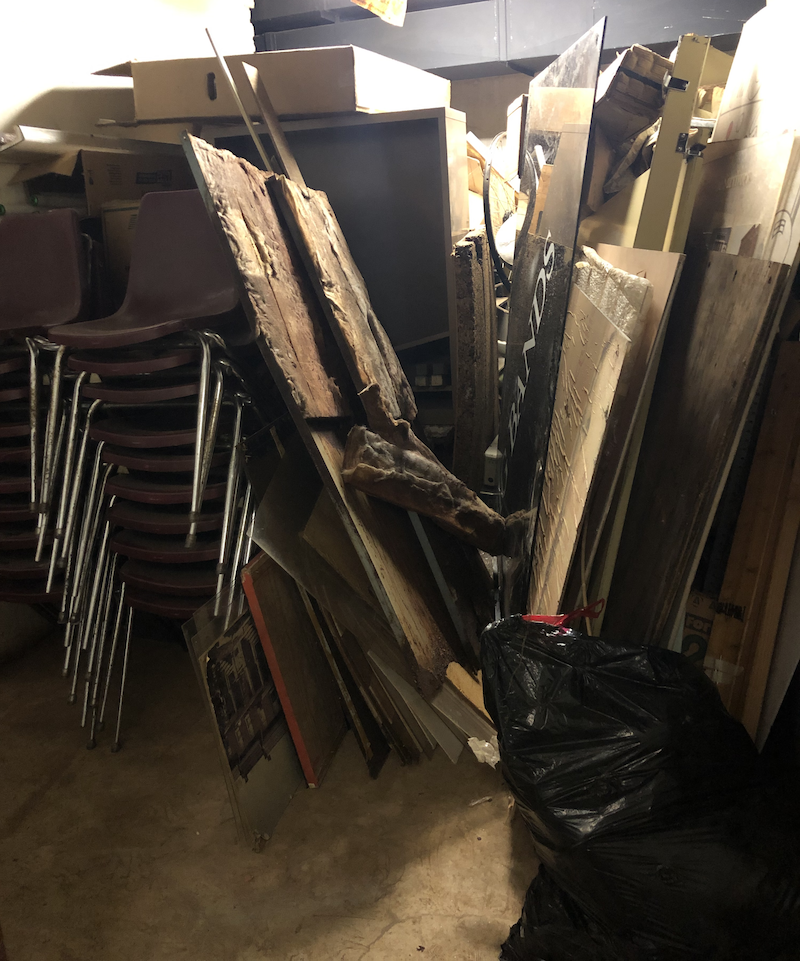
A heap of trash includes lots of cardboard boxes found in the basement of the Peale!

Help us take out the trash!

This summer an intrepid team from BGE cleaned out the basement of their company’s birthplace – the Peale Museum. We now need to haul the broken chairs, dented metal cabinets, and other detritus from the Museum’s 20th century life away for recycling and safe disposal. A generous board member has offered up to $1,500 in matching funds for the costs of removal. Can you make a donation or offer in-kind help for this essential renovation clean-up? Email us if YOU can help!