A Working Timeline by Dean Krimmel, Mary Ellen Hayward, and The Contemporary
- Introduction
- Terminology and Citations
- Special Thanks
- Contact Us
- Prelude to Public Education: 1864-1866
- Colored Schools & Public Education
- Peale Center’s Colored School Era: 1878-1889 Male and Female Primary School No. 1
- Colored Grammar School, No. 1 opens in the Peale Center building
- Colored High School leaves the Peale Center
- Male Colored Primary School Leaves the Peale Center
- Postscript: 1890s-1900
Introduction
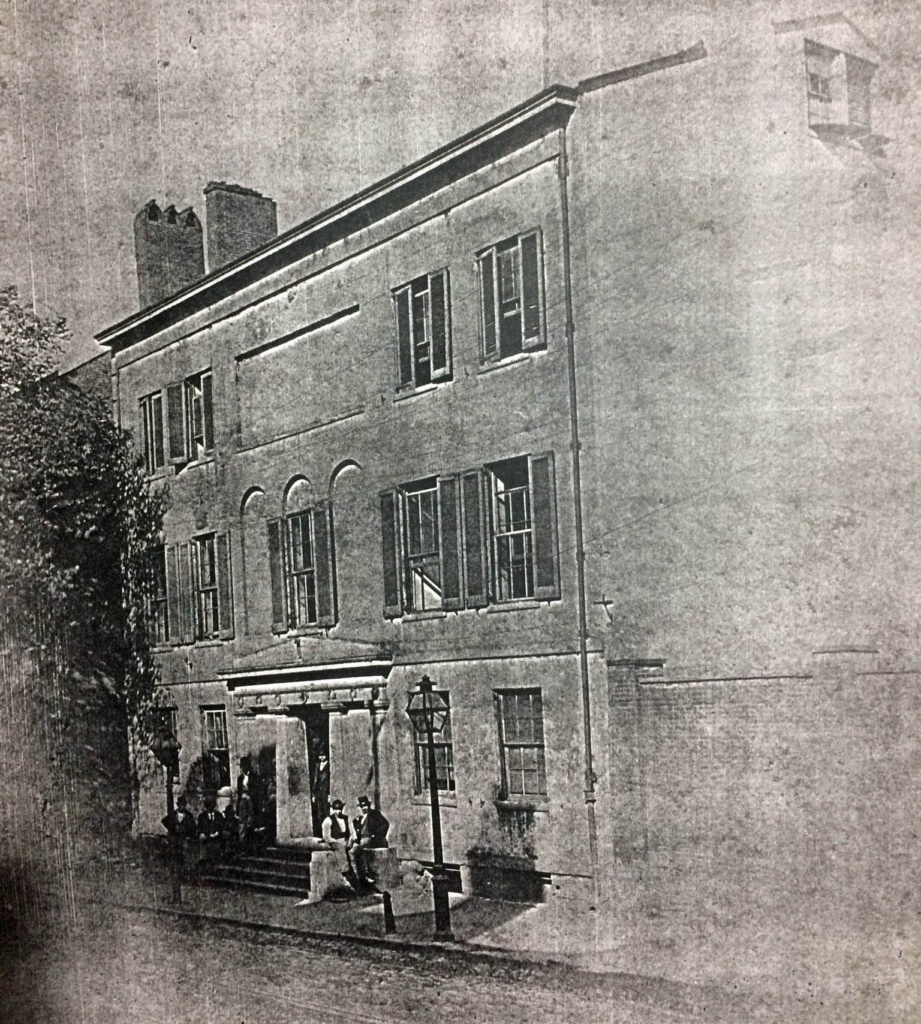
This timeline provides a context for understanding the history of the Peale Center building (225 Holliday Street) as a Colored School from 1878 to 1889. It documents efforts by Baltimore’s Black community between 1864-1900 to secure public education for its children—a privilege enjoyed by white Baltimoreans since 1830.
We hope it piques your curiosity about Baltimore’s Colored Schools, the history of public education, and the impact of white supremacy ideology on African American life in Baltimore, Maryland, and the nation.
It is intended as a work-in-progress, and a vehicle for sharing information. It seeks to document rather than interpret, and to raise questions that spark further research.
Why use “Colored”?
We use the term “colored” throughout the timeline to reflect the language of late 19th-century and early 20th-century historical records and source material.
Citations (in process)
Afro: Afro American newspaper via ProQuest Historical Newspapers accessed through Enoch Pratt Free Library website
BCD: Baltimore City Directory
MSA: Maryland State Archives
PC: Text taken verbatim from research by The Contemporary
Putney: Martha S. Putney, “The Baltimore Normal School for the Education of Colored Teachers: Its Founders and Founding.” Maryland Historical Magazine 72 (Summer 1977): 238-252.
Sun: Baltimore Sun via ProQuest Historical Newspapers accessed through Enoch Pratt Free Library website
Thomas: Bettye C. Thomas, “Public Education and Black Protest in Baltimore.” Maryland Historical Magazine 21 (Fall 1976): 381-91.
Special Thanks
Ginevra Shay, Jazmin Smith, and Mary Ellen Hayward for gathering much of the material used here for Abigail DeVille’s exhibition “Only When It’s Dark Enough Can You See The Stars” (Organized by The Contemporary; hosted by Peale Center, April 16-June 11, 2016). Dr. Mary Ellen Hayward did a considerable amount of additional research more recently for the Peale Center Colored School Project. Dr. Brian C. Morrison added valuable comments and provided information based on research for his 2008 dissertation.
Your comments, suggestions, or corrections are welcome.
Interested in learning more? Contact us.
Interested in learning more? Let us know. We may have additional research to share. We’d also love to broaden our coverage of events beyond the Baltimore Sun by looking at the Baltimore American newspaper. Recognize a name? Please contact us. We’d love to find descendants of the pioneering students, teachers, and principals who paved the way for future generations.
Prelude to Public Education: 1864-1866
November 28, 1864
The Baltimore Association for the Moral and Educational Improvement of the Colored People is founded some six weeks after ratification of a new state constitution which ended slavery in Maryland. Created by a group of white Baltimore businessman and civic leaders, the Association would establish eight or nine primary schools for African-Americans — and help pave the way for publicly-funded colored schools. (Sun)
Baltimore’s black community had a long tradition of educating children in churches schools and private academies—which continued even as people called for publicly-funded education on par with white Baltimoreans.
January 9, 1865
(Some sources say January 2, others January 3)
The Association opens its first school (School No.1) in the African Baptist Church, Calvert and Saratoga. (PC) [Putney says the school was housed in Crane’s Building, northeast corner of Calvert and Saratoga, a claim backed up by the September 4, 1865 Sun article, below.]
September 4, 1865
The Association places a notice in the Sun to announce Fall opening of schools “of the Association” on Monday, Sept 4, at 8:30am.
- No. 1 Crane’s Building, corner Calvert and Saratoga
- No. 2 Peck’s Church, Chestnut st
- No. 3 Sharp Street Methodist Church
- No. 4 Biddle Alley, near Tessier
- No. 5 Caulker’s Hall, Dallas street near Eastern
- No. 6 Montgomery Street, near Howard
- No. 7 Orchard St M.E. Church
“These schools are open to all sexes and to all ages above 6 years old. The Night Schools will be open at 8 o’clock for men and women. Parents are invited to send their children to these schools.” John T. Graham, Secretary
June 16, 1866
The Association starts a Normal School at School No. 1 (Crane’s Building) to train students to become teachers. The Colored Normal School would later move to Saratoga and Courtland streets, and eventually become Bowie State Teacher’s College. [Putney]
Colored Schools & Public Education
Fall 1867
Baltimore city opens schools for colored children, following passage of an ordinance by the city council—and two years of debate. The Association turns over its school buildings for use by the city. The school board refurbishes some and relocates others deemed unsuitable for the education of children. The schools are mainly under the control of white teachers; by late 1868, students are taught exclusively by white teachers. The schools are governed by the same policies as white schools in terms of curriculum, books, ten-month school term. [Thomas]
September 25, 1867
At the weekly meeting of school board, it is noted that “Miss Martha A. Clark, colored, applied to Board of School Commissioners for a position as a teacher in one of the colored schools recently established –ordered on file along with several applications of white women.” (Sun)
October 2, 1867
Rev. J.N. McJilton, superintendent of public schools, reports to the school board of commissioners that there are nine colored schools with 22 teachers. The board adopts a resolution to establish night schools in the 9th and 11th wards. (Sun)
October 16, 1867
Colored superintendent of schools William Howard Day reports to the School Commissioners that the Freedman’s Bureau has asked for monthly reports of the colored schools under control of the school board. Baltimore’s colored schools, according to the Sun, are as follows:
- No. 1 Douglass Institute [11 Lexington street, near Davis]
- No. 2 East St
- No. 3 Sharp St
- No. 4 Biddle Alley
- No. 5 Dallas St
- No. 6 Montgomery near Howard
- No. 9 Thompson St
June 24, 1868
A report by the commission on Colored Schools states that there are nine schools with about “1,100 scholars on roll, with an average attendance of 800, and employing 21 teachers.” year.” The report notes that the number of students at this time of year is much less than in the fall and winter terms. A resolution is passed to establish 10 male and female primary schools with the sexes to be divided and to have white teachers. Schools to be called primary schools. Some members argue that colored teachers should be employed so as “not to mix the races,” but motion voted on and defeated. (Sun)
September 9, 1868
A report submitted at School Commissioners meeting gives locating of the colored schools, which will open for the year on Monday, Sept. 14. (Sun)
Male School No. 1———–SE corner of Saratoga and North
Female School No.1———-Douglass Institute [11 Lexington st]
Male School No. 2————Corner of Douglass and East streets
Female School No. 2———-Corner of Thompson near Aisquith
Male and Female School No. 3—Sharp near Lombard
Male School No. 4————Biddle Alley near Penn
Female School No. 4———-Orchard St. near Druid Hill
Male and Female School No. 5—Dallas near Canton [Fleet]
Male and Female School No. 6—Montgomery near Hanover
November 25, 1868
Prominent black businessman Isaac Myers pushed the school commissioners to provide “higher depts. of public instruction” for colored children and the commissioners appointed a committee to look into it. [PC]
July 28, 1869
Mr. White, a member of the commission on colored schools, submits a resolution that on the first Monday of September 1869 the word “primary” be removed from the name of the colored schools and that they be known henceforth as “colored schools” with numbers 1-7 and “that the principals of said schools be directed to have classes in grammar school studies whenever the condition of the pupils will admit.” (Sun)
November 29, 1871
The committee on colored school No. 1 is authorized by the board of school commissioners to “rent the building on Lexington St., near North [Guilford Avenue] street.” (Sun)
October 9, 1872
The new Colored School No. 3, corner of Montgomery and Howard, opens with formal ceremonies. The former church building was “almost entirely rebuilt and adapted to its present uses” at a cost of $18,000. The two-story school house measures 50×70’ and contains five rooms on each floor with a capacity of 800 pupils, male and female. Currently has 400 pupils. It had formerly occupied the basement of Ebenezer Baptist Church. (Sun)
May 28, 1873
A School Board committee recommends the acquisition of a “suitable building in a central locality” for a colored grammar school “to be known as male and female No. 1.” Members had recently visited all the colored schools and found “by examination and inquiry” that at least 250 pupils of both sexes were qualified to enter the grammar school grade. The course of study will include orthography, reading, penmanship, geography, grammar, arithmetic (mental and practical), and history. Exams for admission to be held as soon as a building is procured; yearly exams to be held in February and July. (Sun)
June 3, 1873
A “Colored School Examination” — an annual testing of Douglass Institute High School pupils under principal Rev. D.M. Rowan occasioned circulation of memorial “signed by over 300 prominent colored men” calling on the mayor and city council for the establishment of a colored high school. (Sun)
June 25, 1873
The Proposed Colored Grammar School. A committee formed in Baltimore “devoted to the general advancement of the colored people of the city” have petitioned the school board commissioners recommending that “due consideration be given to colored applicants” in the appointment of a principal and assistants for the proposed grammar school. The group, led by W.H. Bishop, Drs. H.J. Brown and Wilfield Winsey also asked that the location may be central, that its immediate surroundings have a moral and elevating influence, and that the sexes be kept separate. (Sun)
July 16, 1873
An application from Stansbury Boyce, colored, for a position as teacher in the colored grammar school was received and referred to the committee on colored schools. (Sun)
August 27, 1873
Mr. Dodge presented a memorial to the school board from “a large number of colored citizens and taxpayers, asking the appointment of Rev. D.M. Rowan as principal of the colored grammar school; also presenting the names of the following ladies of the colored race for the position of assistant teacher: Misses Ann Haley, Ellen Forrester, Jennie Warren and Misses Jones and Johnson, who have been practically engaged as teachers under Prof. Rowan…” Referred to the committee on colored schools. (Sun)
September 10, 1873
School Commissioners discuss opening of the new colored grammar school at their weekly meeting, including appointment of colored or white teachers. Mr. Poe and Mr. Spear appointed special local committee on a new colored male and female colored school on Saratoga street. Next Tuesday (Sept) is set for election of teachers for colored male and female schools. (Sun)
October 8, 1873
Charles E. Hill is elected principal of the colored grammar school which will open Monday, next. (Sun)
October 15, 1873
Colored Grammar School No.1 will soon open [at 61 Saratoga Street, between St. Paul and Church Lane]. An exam is held with 100 students from different schools responding. Sixty-seven are admitted. One session a day is set, from 9am to 2:30pm. Pupils will be coming from all over the city. Miss Josephine Kettlewell is appointed assistant. (Sun)
November 12, 1873
It is reported at the weekly school commissioner’s meeting that “…the establishment of colored grammar school No. 1, had produced a good effect on the colored schools in stimulating he pupils in the primary to advance to the grammar school.” (Sun)
Spring 1874
BCD lists 11 schools under “Colored Schools”:
- Male and Female Primary Schools No. 1——-5 Lexington
- Male and Female Primary Schools No. 2——-Corner Douglass and East
- Female [Primary School] No. 2 ————Corner Thomsen and Young
- Male and Female Primary Schools No. 3——Corner Montgomery and Howard
- Male and Female Primary Schools No. 4——Middle Alley near Pennsylvania
- Female Primary School No.4————Orchard near Druid Hill
- Male Primary School No. 5————Eastern, near Broadway
- Male Primary School No. 7————Raborg, west of Fremont
- Male Grammar School [No. 1]————61 Saratoga St
Spring 1875
BCD listings show that No. 1 Primary, Male and Female has moved two doors west, from 5 to 9 Lexington. (That puts the school on the north side of Lexington, one door east of Douglass Institute (#11), between North (Guilford) and Davis street, east of Calvert).
January 19, 1875
A petition for purchasing City College building for a colored high school purchase is presented to the second branch of the City Council yesterday by Rev J.H.D. Johnson, Henry Jakes, Henry Bradshaw, and others. (Sun)
February 9, 1875
Mr. Kirk presented a report and resolution that was adopted for discharge of the committee on education of second branch of further consideration of purchase of 53 St Paul street just vacated by the old City College for a colored high school. Kirk stated that the building which had been purchased on Saratoga near St Paul and now used as a colored grammar school is sufficient for the present wants of colored pupils. (Sun)
January 24, 1877
A resolution is submitted at the weekly School Board meeting by Mr. Ferry of the committee on colored schools, was passed for a new colored school, as petitioned for by colored citizens of South Baltimore, on Columbia Ave (now Washington Blvd) near Poppleton Street. (Sun)
June 2, 1877
The petition for a colored school for the northeastern section of Baltimore was introduced during the weekly School Board meeting. (Sun)
July 20, 1877
Baltimore’s Inspector of Buildings invites proposals for the erection of a new school building to be occupied by male colored School No.7, Fremont and Waesche. The school has 436 pupils and eight teachers. The new building is expected to cost $18,000. It will be the second new colored school building since construction of Primary No.2 on East Street. There are eight male colored schools, four female, and seven evening schools—19 in all—with over 4,000 pupils enrolled. (Sun)
January 16, 1878
The School Board received a petition from P.S. Henry and 100 others for a new colored school on West Street, between Leadenhall and Hanover. Referred to the committee on colored schools. (Sun) [Committee later reported against the petitioner, as per Sun, February 6, 1878.]
March 13, 1878
The school board received a communication from George Scott and other teachers at Colored School No.6 about overcrowding — “inadequate accommodations for the number of pupils.” There are 200 pupils, one class with 80, attending the three-room school. Two of the rooms are 10 x 10 feet. The teachers request use of the unused male primary school on Barre near Eutaw. (Sun)
Peale Center’s Colored School Era: 1878-1889 Male and Female Primary School No. 1
March 20, 1878
During the weekly School Board meeting, Mr. Plaskitt reported that special committee on securing the old city hall on Holliday st, now on Lexington, visited the building with city comptroller and “were satisfied that it will answer the purpose.” “It has been moved in the City Council to appropriated $5,000 to fit the building for the purpose.” (Sun)
March 21, 1878
The council’s committee on education considered yesterday a proposition to repair the “old city hall” property “for use by colored grammar school No. 1, now occupying the building back of Lexington street and part of the Douglass Institute, for which latter an annual rent of $240 is paid by the city.” (Sun)
March 22, 1878
The council’s committee on education will reportedly recommend an appropriation of $5,000 to repair old City Hall for use by colored grammar school No.1. (Sun)
March 27, 1878
The City Council’s First Branch will appropriate “$5,000 to fit up the ‘old City Hall’ building on Holliday street for use by colored grammar school No.1., on Lexington street, the building to be turned over to the school commissioners for educational purposes…” (Sun)
April 17, 1878
It is reported at the School Commissioners weekly meeting that the Mayor has signed the ordinance to spend $5,000 on old City Hall for a colored school—with no mention that it’s for colored grammar school. (Sun)
Spring – Summer 1878
Old City Hall is modified for use as a Colored School. Here, quoted at length, is the description of work done from the “Report of the Inspector of Buildings.” The report is part of the “Mayor’s Message and Reports of the City Offices” for 1878.
Old City Hall “has been repaired and modified so as to fit it for school purposes, and it was turned over, the latter part of last August, to the custody of the School Commissioners, who have dedicated it to the use of colored pupils, under the title of Male and Female Colored School No. 1.”
"The original plan of the building has been adhered to, with the exception of dividing the room formerly used by the First Branch City Council as a chamber into two rooms, and similarly the portion of the building immediately under it, the first story. The building in rear of old Council chamber was taken down, in order to make room for a yard, and also for and adjunct building enclosing a rear stairway."
“The plan of the building now may be described as follows: The first story is entered by a wide door on Holliday street, opening into a roomy hall, containing an easy open stairway ascending to the second story; on each side of this hall are two class-rooms; the rear end of the hall connects with a lateral passage leading to a door opening on the south yard, and also a door opening into the two class-rooms in the rear end of the building. The first story, therefore, contains six class-rooms.
The second story is reached by ascending the front hall stairs, which land about the centre of the building, in the front of which are three class-rooms and a reception room, and to the rear are two class-rooms; all these rooms have separate access to them by passages. The exit from the second story is made by descending an easy platform stair to the rear vestibule in the first story, which has a door on one side opening in the north yard, and a door on the other side opening on a public alley ten feet wide; so that ample egress is provided in the building, to be voided in cases of emergency, panic, or danger. The second story contains five class-rooms.
The present capacity of the building (as restored) is, then, eleven class-rooms, which ought to seat comfortably five hundred pupils. The report goes on to say that the third story has not been repaired for use but if the need arises, it “ought to have capacity for one hundred and twenty additional pupils.” [PC]
August 2, 1878
Baltimore’s public school buildings are being cleaned, whitewashed, and painted in preparation for the school year which begins in the first week of September. “The old city council chambers, on Holliday street…are being turned into a colored grammar school…” “The front of the building has been made to assume quite a collegiate appearance by heavy white pillars at the entrance.” (Sun)
August 28-31, 1878
Office of the Commissioners of Public Schools place a notice in local newspapers that public schools will resume on Monday Sept 2. No. 1 COLORED PRIMARY SCHOOLS will open in the old City Hall on Holliday street. (Sun)
September 2, 1878
First day of class for pupils attending No. 1 Male and Female Primary Schools in the building that now houses the Peale Center (now 225 Holliday Street).
September 7, 1878
The school in old City Hall was flooded “a few days ago” after the water was turned on. Blamed on the buildings “old water pipes” which were “allowed to stand” when it was remodeled.” (Sun)
October 2, 1878
The new school is dedicated. As reported on October 3, by The Sun, Mr. Plaskitt announced a dedicatory ceremony would take place in the afternoon in the renovated old city hall building where this school is held. Mayor Latrobe, ex-Mayor Vansant, and ex-Gov. Whyte to speak some black clergy attending. There are 250 female and 160 male students. Mentions Plaskitt, Ives and Wentz, committee members. (Sun)
November 6, 1878
Teachers of colored school No. 1 send a request to Mr. Plaskitt to “asking that ventilators be placed in that school, the old city hall.” (Sun)
February 12, 1879
Mr. Poe reports to fellow school commissioners that a recent examination for promotions from primary to grammar schools revealed more than 161 pupils in No.1 colored grammar on Saratoga street “for whom there is no room in that school.” The local committee on colored schools was authorized to “colonize the pupils in excess in vacant rooms in the colored primary school building on Holliday street, the old city hall, or in the new school building, No.7 colored, on Waesche street.” (Sun)
April 2, 1879
Mr Plaskitt offered a resolution, which was referred to the committee on buildings, asking for a new building for a new building for colored grammar school No. 1, Saratoga and Courtland streets. He said a new building will obviate the necessity of a separate building for a colored high school. (Sun)
May 12, 1879
John Hayward Camper, 33, sits for the teacher examination – “the first effort made by the colored race to obtain employment in the public schools of Baltimore.” Board of school commissioners, the Sun reports, expected more colored candidates. Camper, a resident of 12 Hollins Alley and teacher at St. Denis school in Baltimore County, finished the 9am-7pm exam early and was examined for a position as a principal in colored primary or assistant in a grammar school. [Camper is a big name in public education.] (Sun)
May 21 – June 2, 1879
Sun reports the following: Adopted [by second branch] $300 appropriated to repair three rooms in the old city hall Holliday st for use of a colored grammar school. (May 23 Sun article reports that it passed the first branch. June 2 Sun reports that the Mayor has approved the ordinance for the repairs.)
Colored Grammar School, No. 1 opens in the Peale Center building
July 9, 1879
“Male grammar school No.1, colored, to be removed to the Old City Hall, and primary No.1 transferred from there to the old grammar school on Saratoga street” as per meeting of school commissioners. (Sun) [Don’t find anything in the Sun between July 1879 and spring 1880 about the opening of the school.]
August 27, 1879
Among the applications for teaching positions filed is one from Rachel S. Garner, colored. (Sun)
December 17, 1879
It is reported at the school commissioners meeting that an application for position as teacher is received from James H. Scott, colored. (Sun) [Scott was a graduate of Baltimore’s colored grammar school, according to an April 6, 1880 article regarding colored teachers in colored schools.]
Spring 1880
- First CD listing of Peale as colored school:
- No 1 Grammar School, Old City Hall, Richard Grady
- No 1 Primary School, Old City Hall, Male, David P. Brown. Female, E.M.
- There are seven primary schools in all, three of them Male only (Nos. 5-, as well as Baltimore Colored Normal School at Courtland and Saratoga
- Notes on Richard Grady: Listed in 1880 BCD as Dr Richard Grady, dentist, 245 n Carey. Found in 1880 census: 29 years old, New York native of Irish parents; married to Ellen C Grady, 32. Two young children plus 14-yr-old white nurse and 24 y/o black servant in the household. In 1883 BCD, still a dentist only.
April 6, 1880
A committee of colored citizens appointed at a public meeting had a second interview with the school board’s committee on colored schools to urge the school board to appoint colored teachers for colored public schools. Included Rev. J.H. Riddick, chairman, Rev. W.M. Hargrave, Rev. J.W. Beckett, Messr. John W. Locks and Peter T. Gross. Revealing transcription, mostly of Hargrave and Wentz, colored school committee chair. (Sun)
May 10, 1880
An examination of applicants for the position of teacher in Baltimore city attracted 188 persons from across the state and country. Included 42 colored males and 28 colored females, 102 white females, and 16 white males. (Sun)
September 22, 1880
Colored citizens meet to discuss a report on colored teachers for colored schools, Rev J.H. Riddick reported that he had talked to white teachers all but one of whom were willing to have colored assistants. The principal of grammar school on Holliday St said NO. (Sun)
October 9, 1880
Dr Richard Grady, principal of colored grammar school, is grand marshal of Tenth Division for the Great Celebration (Baltimore’s 150th anniversary) parade. (See also October 6 Sun article.) Grady was grand marshal for division comprised of all colored pupils in parade. (Sun)
Spring 1881
No.1 Primary School Female has moved to 61 Saratoga; E.M. Dudley, principal. (BCD) Grammar School No.1 (Grady, principal) and No 1 Primary School Male (Wm T.R. Saffell, principal) are still on Holliday Street. (BCD)
There are still seven Primary Schools in all, Nos. 5 & 6 being Male only.
January 24, 1882
“Mr. Wentz offered an ordinance that the board of commissioners of public schools be directed to establish a high school for colored children in connection with the colored grammar schools as soon as fifteen properly qualified pupils shall present themselves; the institution to be called The Colored High School of Baltimore City, to be presided over by one professor until the number of pupils shall exceed 45, at a salary of not more than $1000 per annum, and that the qualifications of pupils shall be the same as white pupils in similar schools. The ordinance was referred.” [PC] (Sun)
February 21, 1882
Enoch Pratt and other managers of Colored House of Reformation visit No 1 Colored Grammar School. “Specimens of writing and composition were examined, and vocal selections were given by the pupils. Mr. Pratt was introduced as the founder of the free library and made a few remarks.” (Sun)
April 5, 1882
At the weekly meeting of School Board, Mr. Gale offered a resolution, which was referred, declaring that it is expedient to organize a high school class in conjunction with the colored grammar school No. 1 as soon as there are 15 pupils sufficiently advanced for promotion; said grammar school to be hereafter known as the Colored High and Grammar School.” And that the committee should urge on city council education committee the plan proposed by Mr. Wentz. (Sun)
November 1, 1882
At the weekly meeting of the School Board, Mr. [Riemer?] offers a resolution that a high school class be established in connection with colored grammar school No. 1, said school to be hereafter called the Colored High and Grammar School; that the superintendent arrange the course of study to be pursued therein, subject to the approval of the commissioner on colored schools. Resolution adopted. (Sun)
March 13, 1883
The school board discusses the addition of a grade to the colored high school. There is disagreement over whether or not it had, with Morris referenced saying yes and school board conference committee saying no. Also discussed raising the salary of the principal (Dr. Richard Grady). (Sun)
1883
Annual Report of School Commissioners for 1883 noted: “The building occupied by the Colored High and Grammar School and Male Colored School No. 1 is not a suitable one in scarcely any respect. It is not well arranged and some of the rooms are too small and very badly lighted. In some of the rooms, on the lower floor, it is scarcely possible to see sufficiently well to read on cloudy days. If, in case of fire or for any other cause, it became necessary to move the children quickly out of the building, great difficulty would be experienced on account of the narrow stairway down which pupils on the third floor have to pass in getting out of the building.” [PC]
High school enrollment is 18 pupils [Thomas]
Spring 1884
BCD includes first listing of “High and Grammar School, Old City Hall. Richard Grady.” No1 Primary Male, still at Peale. Still Wm T.R. Saffell
May 28, 1884
George Staley is named principal of the colored high and grammar school. (Sun)
February 18, 1885
Dr. G.L. Staley, principal, and Mr. Plaskitt of the school board and others “earnestly insist that the colored high and grammar school, male and female, “totally unfitted to accommodate so many pupils as are crowded into it, and therefore is unhealthy and even dangerous.” The first floor has three rooms of moderate size that seat 140 pupils—40 more than are comfortable. The second floor has five rooms, two very small, for 235 pupils. The third floor has four rooms and 200 pupils. Three of them ought not to have more than 35 pupils in each. The principal has taken the second section of the grammar school into his room. The stairways from the second to the third floor are only three feet wide. (Sun)
February 25, 1885
A letter from Bishop Wayman of the AME Church and “18 colored pastors of various denominations” calling attention to “the utter unfitness and overcrowded condition of the colored high and grammar school in the old City Hall” is read during the weekly meeting of the school commissioners.” It was referred to the proper committee.” (Sun)
March 17, 1885
An ordinance for a new colored high and grammar is proposed during a session of the first branch of the City Council. “Mr. Thornton offered an ordinance to lease a lot to build a new school “The latter building [old city hall] is said to be in bad condition for school purposes.” It is referred to the committee on education. (Sun) [William E Thornton is listed in 1885BCD as member First branch, 9th ward]
March 20, 1885
Philadelphia’s superintendent of public schools, James McAllister, and members of the city’s board of education visit the Colored High and Grammar School during a trip to Baltimore to examine the Manual Training School. They commend the educational facilities “as regards teaching the pupils,” but thought the building “unfitted for its present use.” (Sun, March 21, 1885)
April 1, 1885
Objections to Dixie. Pupils of the Colored High and Grammar write a remonstrance to Mayor Latrobe against “the indignity about being heaped upon us by our teachers in compelling us to sing ‘Dixie.’ They say that to sing the song will only ‘tend to humiliate them.’ The objectionable parts are:
I wish I was in the land of childhood,
Roaming there among the wild woods,
In Dixie’s land, I’ll take my stand,
I’ll live and die in Dixie.
Dr. Staley, principal, reported that the pupils have been rehearsing for an Easter entertainment to be held today. It includes a recitation by two groups, one singing Yankee Doodle, and the other Dixie, after which they unite to sing Home, Sweet Home. (Sun)
April 2, 1885
Colored High School pupils sing Dixie (along with Yankee Doodle) at their Easter event. The Sun describes as “by far the most entertaining feature of it.” Violet Thompson, a little girl, recited in a clear musical voice lines descriptive of lives in the camps – later one half of the school children broke out in song (“Dixie”). Two other pupils mentioned: Ella Cooper and Mollie Taylor. In attendance were John Morris, school board president, city councilmen, Prof. Wise, superintendent of public schools, and “Rev. Snowden, colored, of the Centenary Biblical Institute. (Sun)
June 22, 1885
Rev. Harvey Johnson (Union Baptist) and five other Baptist ministers found the Brotherhood of Liberty. Hold their first public meeting in the Fall of 1885; Frederick Douglass is principal speaker. Brotherhood creates a Committee on Education that became Maryland Educational Union. Hold an important public meeting on May 3, 1887 which prompts a City Council resolution in support of black teachers. The council then watered it down so black teachers would only be hired in new schools and no white teacher could teach with black teachers. [Thomas]
November 14, 1885
Three white Baltimoreans, G.S.Griffith, Charles W Slagle, and Francis P. Stevens, write to the Sun calling for a new colored high and grammar school. Based on their recent visit, they call for “larger and better accommodations in a more suitable locality.” “There is scarcely a more unfit place for school purposes than Old City Hall,” they write. “The neighborhood, as everyone knows, is given up so entirely to manufacturing establishments that you can scarcely conceive of a place more unsuitable for educational purposes. The continual roar from the street, the blowing of steam whistles with smoke and dirt from engines, make school work at times impossible…” But still worse than this, the building is utterly unfit for school use. Of the thirteen rooms used by the school, only three are fit for class-rooms, by reason of defective ventilation and insufficient light. Most of the rooms are crowded almost to suffocation, those on the first floor having low ceilings and damp walls….” The writers report that the attendance on the day of their visit was 495 out of 524 pupils enrolled (95%), but that doesn’t include “150 primary-school scholars who are in the same building.” The committee on the school board and council committee on education agree, and urge the new council to consider the matter. (Sun) [BCD: Griffith, carpets, and President, Maryland Sunday School Union; Slagle: Commission Merchant; Stevens: attorney]
April 21, 1886
City Council approving ordinances and resolutions authorizing $115,00-125,000 for new schoolhouses and repairs, $57,000 going to colored schools. That includes $32,000 for a new high and grammar school. The mayor is urged to sign the ordinances in a memorial from George Lewis Staley, principal of high school, and W.N. Saffell, principal of primary school, “together with all the other teachers in both schools…” The school, they write, is “dark and damp, and not at all adapted to the conveniences of scholars and teachers.” The mayor favors building a new schoolhouse that will be staffed by colored teachers. (Sun)
February 16, 1887
At a meeting of colored Baltimoreans concerning black-white marriages, T.R. Watkins remarks that the “colored school on Holliday st is old and dilapidated… we should send our kids to white schools since nothing has been done to address our complains…” (Sun)
March 22 – April 21, 1887
A resolution is introduced and referred in the first branch of City Council, yesterday, to turn old City Hall over to the Water department as soon as it was vacated by the colored school. (Sun, March 22) An ordinance and resolution is adopted regarding this proposal for the Colored High School (Sun, April 7). The second branch action agrees (Sun April 14) Mayor Hodges signs ordinances and resolutions including one to turn over building. (Sun, April 21)
May 25, 1887
A report on Colored Schools excoriates the lack of support, funding, schools for black Baltimoreans. It states that no one has yet “No kind of diploma or certificate of graduation has ever been awarded to those who have completed with credit the prescribed course of study.” (Sun)
September 7, 1887
School Board President John T. Morris says the deed to new colored high on Saratoga Street will be picked up tomorrow (Sept 8). (Sun)
December 22, 1887
“The plans for the new colored high and grammar school have been prepared.” (Sun)
Spring 1888
BCD listings: High and Grammer (sic) Old City Hall. George L. Staley, principal. (Rev. Geo L Staley, 1628 Calvert Street) Primary No. 1 Male Old City Hall, still Saffell
October 5, 1888
“Roberta Sheridan, colored, has been appointed teacher in the Waverly public school, the first colored teacher to receive an appointment.” Waverly is one of the Annex schools. (Sun)
Sheridan (1875-1919), a long-time teacher, was married for two years (1892-1894) to long- time well known teacher/principal George Biddle. Sheridan and Biddle were elected to executive committee of Baltimore County Colored Teachers Association in December 1882, as per Sun, December 2, 1882. Sheridan taught in Pikesville and city schools, into early 1900s. She is dead by February 28, 1919, according to Afro notice that her estate is being settled. [Krimmel has census, BCD entries, and information on her divorce from Biddle.]
More on Sheridan from “The Road from Frederick to Thurgood…” [MSA] https://msa.maryland.gov/msa/stagser/s1259/121/6050/html/12385000.html:
Roberta B. Sheridan was an African American teacher and a lifelong resident of Baltimore. Throughout her life, Sheridan educated black children in Sunday schools and in public schools. One of her largest accomplishments occurred when she was appointed to a teaching position in Baltimore City in 1888, after heated debate over allowing colored teachers into public schools in the city. While teaching at school no. 9 she worked alongside other black teachers including George W. Biddle and Nannie B. Grooms. Sheridan and the other African American teachers hired that year challenged the racial exclusivity of the teaching profession. The public school system had to recognize that African American teachers were both qualified and readily available to teach in Baltimore. Sheridan’s career and personal life indicates a continued devotion to education and to gaining admittance for African Americans as public school teachers.
October 10, 1888
The “New Colored High School” is dedicated (Sun, October 11, 1888). Located on Saratoga Street, three doors east of Charles, it is the first building erected in Baltimore for a colored high and grammar school. Pupils don’t arrive for another two months.
The Colored High is constructed of sand brick with red stone and galvanized iron trimmings. The 59 x 127-foot building is three stories tall and features five wide double doors. There are 24 classrooms, each 22 x 26 feet, and three teacher’s rooms. “Light and airy with two ventilating flues with openings at floors, connected with air ducts which run along the corridors above the ceilings to a large vent shaft in the rear. Shaft is supplied with artificial heat to create a constant draft. Plans made at office of building inspector Oster. Cost, $25,000. The new school will hold 1200 pupils vs. 600 now in the old building. There are 5,000 colored students total in city.
Mayor Latrobe says another colored school building in being built in NW Baltimore into “which will be put into effect that law of the city council for the employment of colored teachers. Prominent colored men also speak: E. J. Waring, colored lawyer; James C. Davis; Rev. D.P. Seaton; Richard Mason.”
November 28, 1888
Colored Citizens present a petition to the city school board for the establishment of a manual training school for colored boys. Petitioners include E.J. Waring, W.H. Weaver, Joseph S. Davis, Isaac Myers, Alexander Williams, W.H.J. Wheeler, J.H. Collett, Dr. H.J. Brown, Joseph E. Briscoe, Dr. R.M. Hall, J.D. Oliver, D.D. Dickson “and many others,” It is referred to the committee on colored schools. (Sun)
November 28, 1888
Mr. O.B. Zanzinger, school commissioner in charge of the high school, offers a resolution during the school board meeting to be referred to education committee “that the graduates of the colored high school who shall attain a final average of 85 in a scale of 100 shall be eligible for ten years as teachers in the colored schools.” (Sun)
Colored High School leaves the Peale Center
December 9, 1888
The new Colored High and Grammar on Saratoga Street is occupied for the first time (Sun, December 10, 1888). The school, which is under the direction of George L. Staley, has 643 pupils. Female Primary colored school No.1, previously located on Courtland Street, also moved in. It has 317 pupils under the direction of Miss Gertrude Mitchell. All the teachers are white, “colored teachers being employed only in the colored schools within the annexed districts.”
January 26 – March 1889
The Water Department gets permission to move into old City Hall. Other groups, including the Veteran’s Volunteer Fireman’s Association, also vie for space. On March 19, the Sun reports that the Mayor vetoes VVFA request, and reports that the Water Department’s mechanical department will soon move into old city hall as its about to vacate current quarters.(Sun)
Spring 1889
- BCD for High and Grammar School is Saratoga near Charles. George Staley, principal. No1 Primary Male address given as Old City Hall.
- BCD lists three “colored schools” among the 16 new “Annex Schools”—and all are staffed with colored teachers.
- No 1 : Merryman’s lane near York Rd, Waverly. George W. Biddle, Waverly Post Office
- No 2: Reisterstown turnpike near Arlington, Annie O. Waters, 919 Valley
- No 3: No 11 Mt Olivet La. Carroll, Garrison, D. Trusty, Carroll Post Office
- Notes on teachers: (1) Annie O. Waters isn’t listed in the BCD, but there’s a William Waters, drays, 919 Valley. He is “colored.” (2) BCD has listings for 12 people named Trusty, but no Garrison. All are colored. (3) George W. Biddle is listed as a teacher, 765 Dover, and identified as colored. Biddle is an early teacher worth documenting. He was later married, for a brief time, to Roberta Sheridan, another long-time teacher (see below). Both were on the pioneering all-black faculty of Colored School No. 9, Carrollton & Riggs which opened in September 1889.
April 11, 1889
Musical and literary exercise at the Colored High School featured students “Mamie Neal, William Murray, Laura Campbell, Bell Hall, Nellie Tompkins, Fannie McCabe, Gertie Deavers, Emma Anderson, Martha Mason, Adelaide Fossett, Ada Trusty, Mollie Taylor, and others.” The Rev. Drs. William H. Weaver and Mr. Cummings delivered addresses. Exercises at male colored school no 1 included calisthenics, recitations, songs, declamations, and an address by the principal. (Sun)
April 17, 1889
Male colored Primary School, No. 1 is still in old City Hall (Peale Center). The female dept has moved to new Colored High & Grammar School. A resolution for a new No.1 Male and Female Primary School is made by 11th Ward councilman, Otway Zantzinger. The Petition presented, signed by E.J. Waring, William H. Weaver and others, was referred to the committee on buildings. (Sun)
April 22, 1889
The committee on buildings will recommend a new building for No 1 colored Primary Male and Female, concluding that there’s not enough room for them in the new colored high and grammar school. (Sun)
May 21, 1889
City Council passed an ordinance empowering the board of school commissioners to “confer testimonials on the pupils of the Colored High School, the same as upon pupils of the Baltimore City College and the Female High School.” This enables graduates to secure teaching positions in the colored schools. (Sun)
June 19, 1889
These students passed to the Colored High School: Emma Anderson, Alexander Keziah, *Pauline Brown, *Adelaide Fossett, *Florence Gray, Cordelia Gross, Sarah Graves, Lillie Jones, *Cecilia Johnson, Nettie Murphy, *Carrie Raynor, Susan Spriggs, *Susie Stewart, Henrietta Scott, Jane Thompson, Mattie Taylor, Louisa Taylor, Mamie Martin. [Names with asterisks are found on list of graduates earning diplomas in Sun, June 24, 1893. Emma Anderson, a sister of Gertrude and Nellie (see next entry) died before graduating.] (Sun)
June 29, 1889
Nine Colored High School graduates receive the first-ever diplomas at a ceremony in Ford’s Opera House officiated by Mayor Latrobe. The seven girls and two boys are Gertrude and Nellie Anderson (see notes below), Gertrude Deaver, Fannie McCabe, Mollie Taylor, Violet Thompson, William Murray, Walter Scott, Mamie Neal. The first seven passed with average above 85, which entitles them “to teach without further examinations.” [These students had presumably attended classes in the Peale Center. We have some research on these students, but welcome more.] (Sun)
The school opened with 567 pupils, including 26 in the high school, according to the Sun. The principal is now Annie P. Core, and there are two male and 14 female teachers, all white. Among prominent colored men present: Isaac Myers, J.S. Davis, Rev. Harvey Johnson, H.J. Brown. Benediction by Bishop A. W. Wayman, of the AME Church. Mayor Latrobe says he is “glad to sign the ordinance providing for colored teachers in schools hereafter to be erected for the instruction of colored children.” He hoped the graduates of the High School “would help supply the demand for such teachers.” (Sun)
Notes on the Anderson sisters: Gertrude (b.1872) and Nellie or Ellen (b.1873) became teachers, as did two of their siblings, J. Henry (b.1877) and Mary R (b.1880). Another, Emma, attended Colored High but died before graduating. The 1900 census found the siblings living with their parents, John H. (b.1841), a waiter, and Rebecca (b.1848) and younger sister Adelaide (b.1886) at 303 Courtland, corner of Saratoga.
Male Colored Primary School Leaves the Peale Center
September 3, 1889
Colored School No. 9 opened (yesterday) at Carrollton and Riggs with a faculty of 12 African Americans—the city’s first all-colored faculty. “The teachers are colored,” reported the Sun, “and it is the first school in the city proper where colored teachers are employed.” George W. Biddle is principal of the male department, and Fannie L. Barbour of the female department.
As late as 1896, this school’s 35 black teachers are still the only ones in public school system versus the 175 white teachers at the colored schools. [Thomas]
By 1902 50% of colored schools were hiring colored teachers
By 1904 75%
By 1907 100%
The faculty of Colored School No. 9 (as per Afro, March 9, 1929) included: George Biddle, head of boy’s department; Garrison D. Trusty, Roberta Sheridan, Ellen L. Anderson, Mary E. Taylor (later Rodman), Mrs. Mary J. Camper; Fannie L. Barbour, head girl’s dept; Nannie B. Grooms, Gertrude B. Deaver, Violet B. Thompson (later Warfield); Fannie D. McCabe (later Waring). (See Brian Morrison’s dissertation for more on Fannie Barbour and Nannie B. Grooms. We have census entries for Barbour for 1870, 1880, 1900-1920.)
September 18, 1889
Among a batch of applications for positions as teachers were ones from John H. Camper and Daniel T. Hanney colored. All were filed. (Sun)
Fall 1889
The Water Department moves into old City Hall (Peale Center), bringing to an end the buiding’s chapter as a colored school. Sun, November 19, 1889, reports an application to Inspector of Buildings for construction of a shed, suggesting that the department has taken occupancy. By December 23, 1889, the department’s office of Chief Engineer is there. (Sun)]
Postscript: 1890s-1900
Spring 1890
BCD listing had not been updated: No. 1 Primary Male and Female Primary No. 1 are still listed as being in Old City Hall.
June 1890
The second class to graduate from Colored High includes two pupils: Ada S. Trusty and George Murphy. (Sun)
Spring 1891
BCD listing for No.1 Primary Male and Female colored schools now with the High and Grammar School on Saratoga near Charles.
September 1892
Colored Manual Training School opens with 105 students and five teachers. (Sun) [Its name changed in 1897 to Colored Polytechnic Institute.
1896
Dr. Marcus Cargill of Baltimore City proposed a bill to the City Council to gradually employ African American teachers in Baltimore City schools for African American children. [MSA and other sources]
1898-1899
Sun and Afro report growing calls for a new Colored High School. In July 1899, the new location was said to be the former site of an English-German School No.1, Pennsylvania and Dolphin. There are also calls for building a new school on a lot at Pennsylvania and Biddle.
July 20, 1899
The Alumni Association of the Baltimore City Colored High School has been incorporated by Heber E. Wharton, W.H. Lee, John C. Anderson, and Henry T. Pratt. (Afro)
1900
There are now 27 colored schools serving nearly 9400 students. [Thomas]