Your Face, Your Place in History
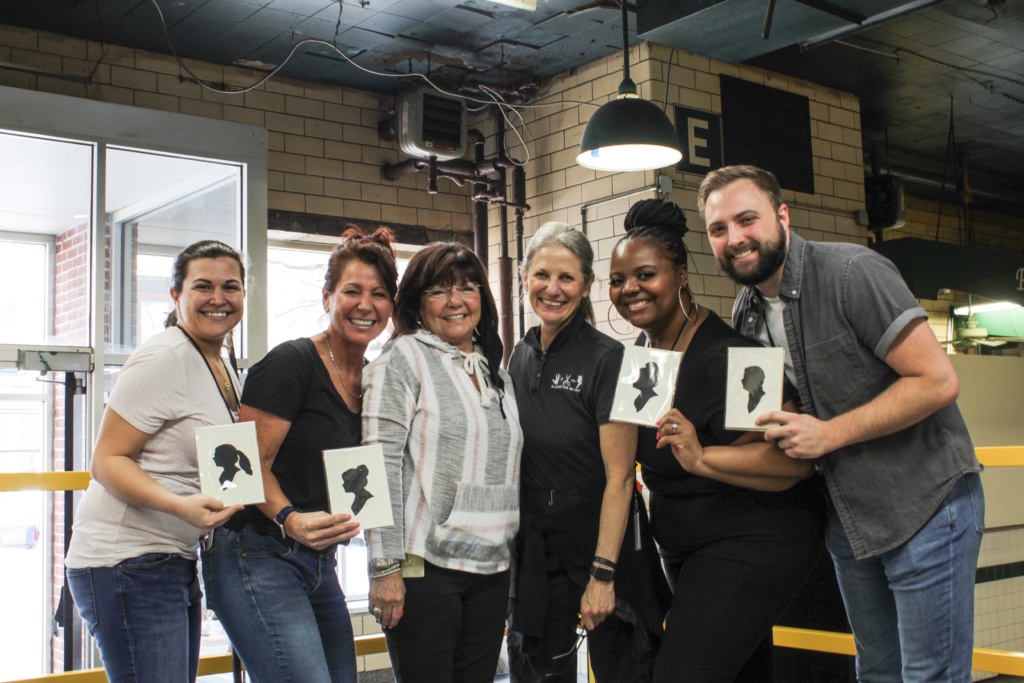
Thank you to everyone who has had their portraits cut for this amazing project!
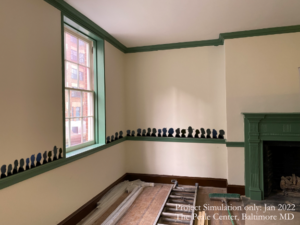
Baltimore artist and participatory-history specialist Lauren Muney is hand-creating and installing custom silhouette (profile portraits) friezes of Baltimore City, Maryland, residents’ silhouettes for long-term, free public installation at the Peale. These faces will encircle several rooms of the historical Peale walls, giving visitors, residents and guests the opportunity to feel the Baltimore ‘family’ all around them. The exhibition will be installed in August 2022.
Social Justice in a Portrait
All of the faces will be profiles, all in the same color—classic black. The portraits showcase the beauty and dignity of each individual. Although a silhouette is a historical portrait form, it speaks to contemporary values of equality: each face will be equally represented and equally valued because they are seen for their essence—not their skin color nor social class, nor any weight of society’s judgements.
The contemporary—but historical-style—portraits on historic walls will allow community residents to visualize themselves as a part of history. When the installation is completed, the sitters will see their faces honored and represented in a public place of historic and contemporary significance; representation is a powerful connection to self- and community-respect and for shifting paradigms of inequity in society.
What are Silhouettes?
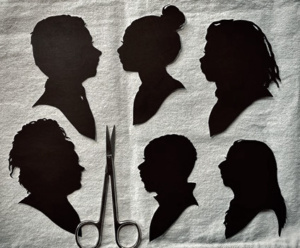
Silhouettes are profile (sideways) portraits. They are most often seen as a black-color profile on a light-colored background. Before photography, silhouettes were the most accessible and popular form of portraits—affordable to anyone with a few pennies, in contrast to expensive painted portraits only affordable by the rich.
Lauren Muney cuts silhouettes freehand with only scissors; she just looks at a person and can cut a remarkable likeness. Cutting silhouettes “freehand” (without drawing first) is a traditional and historical method of creating silhouette portraits. This remarkable skill has put Lauren in a category of under 20 people in the world who cut silhouettes freehand.
The Baltimore Connection
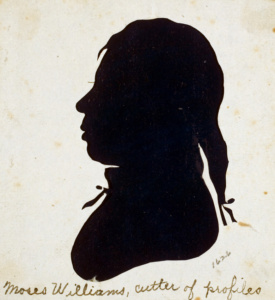
Baltimore has a long tradition of silhouettes. Silhouettes were cut at the Peale Museum starting in 1814. Formerly enslaved artist Moses Williams, cut silhouettes at the Peales’ museum in Philadelphia, which was founded in 1787 by Charles Willson Peale. Silhouettes, by their nature, are a “democratic” portrait form. In the late 1700s, people across the socio-economic spectrum were discovering their own power: their power to work, earn money, and spend it on how they wanted to present themselves.
Moses Williams silhouette courtesy Library Company of Philadelphia| Print Department| Silhouette Collection [(3)5750.F.153b]
Peale Faces Project Vision
The entire project has public engagement at the heart. Community members participate in in every step. Community Members:
- Sit for their own historical-style portrait – less than 2 minutes.
- Receive their own portrait to take home.
- Have the opportunity to record their own personal story for Baltimore’s “ Be Here Stories” storytelling program.
- Attend the public dedication of over 200-300 faces of their friends, neighbors, and loved ones.
- (Visitors will have the ability to hear the audio stories of the people in the profiles in future.)
This project is supported by the Maryland State Arts Council. Thank you, MSAC! For more information on the MSAC, please visit www.msac.org.
Thank you to everyone who has had their portraits cut for this amazing project!